Children's Story Writing Diploma

Module 12 : Illustrating your Story and Working with Illustrators
Duration: Approx 10 minutes
Listen to the Module
In this chapter we will cover the following topics in more detail:
- The power of illustration
- The differing nature of illustration for different formats and age ranges
- How to submit a picture book for publication to a conventional publishing house
- What to do if you want to illustrate your story yourself
- How to self-publish a picture book
- How to choose and work with an illustrator
12.1 Introduction to Illustration
 Illustrations are pictures or designs that combine with words to convey a message to the reader or viewer.
 Good illustrations can transform a humdrum text into a marvellous wonderland for children to enjoy, and poor illustrations can ruin the best of writing. With this in mind, you should take the matter of illustrating your book very seriously.
Whether your book will contain illustrations, and to what extent, depends on the format and target age range that you have chosen.
- Toddler books - will be almost entirely illustration, with few words.
- Picture books - will of course be rich in illustration, with a varying number of words.
- Early levelled readers - will also have many illustrations.
- First chapter books - will usually, but not always, have some illustrations, but these tend to be in black and white and fairly infrequent.
- Middle grade books - are less likely to be illustrated, but sometimes are.
- Young adult books - sometimes have a small illustration or two, but not often.
12.2 Illustrations in Conventional Publishing
 The general rule in publishing houses is that when you submit a book, even a picture book, you should submit only the manuscript - the text.
 The editor will then find an illustrator to work with your writing to produce the finished book, and the author has little to no input in the illustration process. The illustrator and writer each receive half of the royalties from the book.
The idea behind this is that as a writer you are qualified to create a story with words; you would not want the illustrator telling you how to write, as that is not their expertise.
Similarly, the illustrator is uniquely placed to provide a visual counterpart to your words, and does not want to be led by your ideas. You may have an idea of how characters and settings should look in your head, and feel aggrieved that someone else will be taking your idea and changing it. But, editors argue, the illustrator is likely to be able to take that idea further than you could when it comes to visual representation. You may find that, if you are lucky enough to get your book published by a publishing house, you will be pleased with the finished result and accept that the illustrator has done a better job than you could have.
However, you may have a very specific idea in mind that includes both illustrations and text, which you are unwilling to give up.
Editors have the best idea of what will sell and their priority is to do just that. They will have little patience with what they may see as personal sentimentality in a commercial market that is experiencing strain from the changes in the way people read, with the arrival of the Internet and the eBook.
If you feel confident that your illustrations and writing work together well, and are not willing for them to be taken separately, you can submit them as a whole unit. Include a copy of your manuscript (text only), following the publisher's submission guidelines, along with your cover letter. They may prefer a synopsis with a first chapter instead, especially if your book is on the long side, but be guided by their guidelines or response to your query letter (see the next chapter for more general information on submitting your work to publishers). Distinguish page divisions to correspond to your storyboard if you feel strongly about this. Picture books have a standard length of 32 pages, and usually at least four or these are beginning and end matter (the title page, copyright information, etc.). Therefore, you actually have between 24 to 28 pages for the text and illustrations themselves.
The drawings should be rough, first drafts. This is because, at this point, you need to give the editor the impression that you are willing to be flexible about the specifics of the illustrations. They want to see how you think and formulate your illustrations. This is also how the process is performed professionally, so you are demonstrating your understanding of how things are done in the commercial sphere. Finally, include one or two copies of complete art work to give them an idea of your skills and how a finished illustration would look.
You should only go down this route if you have received consistently good feedback for your work from fairly objective bystanders. Your mum telling you that she loves them does not count here; it should preferably be someone with experience in the field of children's publishing, or at least someone who will not feel obliged to be positive. You should also be prepared to self-publish if you are unwilling to be flexible about illustrations.
If you think your strengths lie more in illustrating than writing, or you have found that through the process of illustrating your own book you have more of a passion for this element of the work, submit your package of manuscript plus storyboard and finished pieces to the art director of the publishing house instead. However, unless they see your text and art as a perfect pairing and a successful combination, they will ask you to discard the text, and may offer you a contract based on the strength of your illustrations.
FACT
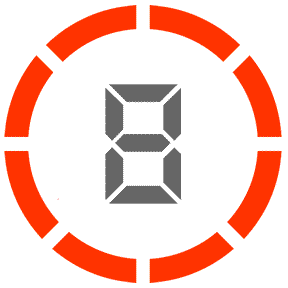
The average person will decide whether or not to buy your book within 8 seconds of seeing your cover
Source: selfpublishingadvisor.com – 2013
12.3 Illustrating a Self-Published Book
 If you choose to self-publish your book, the most pressing and primary concern is cost.
 This is especially relevant if you are producing a picture book, early levelled reader book, or toddler book, because all of these are likely to need to be printed in colour, and printing a colour book rich in illustration is very expensive. Factor this in to your estimations of whether this path is viable for you when you commit to it.
You have two options regarding illustrating a self-published book. You may illustrate it yourself, or work with a freelance illustrator. As we said earlier, the illustrations can make or break a book, especially one which relies on the pictures to tell the story. A lot of the advice in this section is directed towards picture-book, early levelled reader, and toddler book authors, as it is these writers who will have to factor in the subject of illustration to the greatest extent.
Here are the steps you would undertake to plan and execute your illustrated self-published book.
1. Create your text first, perfecting it before you move on to the pictures.
Remember, that in order for a book to be heavily illustrated, there must be something new happening on each page that can be depicted with an image. Divide your proposed text into pages, remembering that you only have 24 to 28 of these to work with in a standard 32 page picture book. Think of whether you could create a picture for the text on each page. If not, rewrite until you can. This is also good for the writing itself, as in picture books, the action to words ratio should be high.
2. Create a storyboard for your book.
You can print out templates for these from the internet. It should look like a bird's eye view of all the pages in your book, side by side. Arrange the text on the pages, along with a proposed idea for the illustration. Think carefully about the layout. Do you want the text in one block on one page, with the illustration on the other? Do you want the entire double page spread as an illustration, with the words transposed on top? More complex layouts like this are likely to be more expensive when you get to the printing stage, and the larger and more numerous your illustrations, the more you will have to pay the illustrator, if you are going to employ one.
If you are, provide them with a rough idea of what you want on each page. This could be a rough sketch of an idea, a description in words, or just a word or two. Many illustrators prefer that you give them as little guidance as you can bear to, and don't like being micromanaged. It is their job, after all, to take the written word and make it into something visual that complements your work.
3. Insert the beginning and end matter into your storyboard and text.
This will include copyright information, a title and possibly half title page, possibly a dedication page, and maybe a page with an illustrated bubble and the words: 'This book belongs to:' If you would like small illustrations on any of these pages, do not forget to include them too.
4. Choose a printer company
Research online for a printer company that will provide you with a good quality product at a low price. There are several considerations here: do you want a print-on-demand service that only prints a book when it is ordered? You'll be looking at a high unit price but low initial outlay. You may struggle to get some services with some of these, like the thick, glossy paper that many picture books have. Decide whether you want to pay extra for features like paper quality, colour resolution, hardback covers, and others. If you are producing a first chapter book, consider having black and white illustrations to keep the costs down, and print on standard, matt paper.
You may decide to go with a vanity press, who will charge you a set amount for a certain number of copies. Increase this number and your unit cost goes down. If you have a lot of capital and are fairly confident that you book will be received well (or simply willing to take the risk), get a large number printed at the outset.
5. Make a full size mock-up of your book, on paper cut to size.
Insert notes for illustrations if you are employing an illustrator, or rough sketches of what you might put in if you are doing the illustrations yourself. This is the stage to check whether the layout is working. Every page of a picture book should cause the child to want to turn to the next. Each should have plenty to discuss, learn from, or laugh about.
6. If you are employing an illustrator, now is the time to do it.
You may have been researching your options previously or in communication with one or more individuals in preparation for this point. Visit online sites, like the Society of Children's Book Authors and Illustrators and childrensillustrators.com, to start searching for someone who you think will give your book an extra sparkle.
Review portfolios of illustrators' work to see whether their style will meet the subject matter and tone of your book. Once you have chosen one, try to trust them. Send them your storyboard and mock up and ask them to create a rough storyboard of what they think would be good on each page. Have a look over this, approve it or make any changes that you feel strongly about, and then let them get on with their work.
Proven, working illustrators do not come cheap. Expect to pay in excess of a £1,000 for an experienced illustrator, and the sky's the limit.
7. If you are illustrating the book yourself, chances are you have a fairly good idea of what you want to include.
Remember to make the illustrations engaging and relevant to the text, enhancing it.
8. Once you have the illustrations you need to do a final format of the book.
You can get a professional to do this for you, or do it yourself. You can find formatters on online freelancing sites, or on their own company websites. Consider paying a professional to do this for you; a professional layout will make all the difference to the final product.
9. Submit your formatted book to the printer.
The methods for this differ depending on which company you go for, but it is generally online and quite self-explanatory.
See the next chapter for more general advice about self-publishing your book.
In Summary
The amount of illustration your book contains will depend on your target age range and the format of your book.
Picture books, toddler books and early levelled readers are likely to be the most illustration-dense.
In conventional publishing the industry standard is to submit your manuscript text-only. If the editor thinks it has potential, they will assign an illustrator to work on the imagery.
If you feel strongly about submitting a package of illustrations with your text, you may do so, but follow the submission guidelines and expect your chances of publication to be reduced.
Self-publishing will ensure that your vision is kept pristine, but can be very expensive.
You can employ a freelance illustrator or do the pictures yourself, if you truly believe you are able.
Learning Topics
- What is it about writing children's books that appeals to you?
- Clearing up the myth that writing for kids is easier than writing for adults
- Some other common misconceptions about writing books for children
- What does writing a children's book actually entail?
Learning Topics
- Physical items you will need to start writing a book
- Managing your time efficiently
- Personal skills you need to succeed as a children’s writer
- Skills you can develop in order to write children’s literature
Learning Topics
- How to use other children's books in order to write your own
- A look at some famous picture books aimed at younger readers
- Excellent examples of first chapter books
- Books aimed at teenagers and young adults
Learning Topics
- The importance of writing for a particular age group
- How to choose an age group
- The most common age groupings used by publishers
- The various points of view you can use to narrate your book
Learning Topics
- The importance of the first page and first line
- Examples of some great first lines in existing children's books
- What you can do to make your first page stand out
- What not to do in a first page
Learning Topics
- Why creating good characters is important
- How to get ideas for characters
- How characters will differ depending on your target age range
- The qualities a character needs to be real and engaging
Learning Topics
- A definition of plot and why it is important
- How to come up with plot ideas
- The traditional plot structure
- How to develop your plot ideas
Learning Topics
- The definition of backstory
- Why backstory is important in children's literature
- What happens when backstory is employed incorrectly
- When to use backstory and when to avoid it
Learning Topics
- Why dialogue is important
- The uses of dialogue
- How to make your dialogue realistic
- How to make your dialogue engaging
Learning Topics
- The problems that a writer will face
- How to improve self-esteem and banish your critical inner voice
- How to achieve your writing goals
- How to overcome writer's block
Learning Topics
- Why writing exercises are useful
- Some writing exercises for different aspects of writing
- Some writing exercises to prompt your writing if you need ideas
- How blogging might help you as an emerging writer
Learning Topics
- The power of illustration
- The differing nature of illustration for different formats and age ranges
- How to submit a picture book for publication to a conventional publishing house
- How to choose and work with an illustrator
Learning Topics
- The importance of perfecting your manuscript before you submit it
- How conventional publishing and self-publishing compare
- The process of getting your book published by a publishing house
- Whether you need a literary agent
Module 1: A Course on How to Write Children's Books
Around 2.2 billion a year is spent on books in uk of which a fifth goes on childrens books.
Module 12 : Illustrating your Story and Working with Illustrators
storyboard
Society of Children's Book Authors and Illustrators and childrensillustrators.com
Module 2 : What you will need to Write Children's Literature in regards to Tools and Personal Skills
This chapter take a look at what tools and skills you need to possess in order to become a successful children's writer, and will cover the following important points:
- Physical items you will need to start writing a book
- Managing your time efficiently
- Personal skills you need to succeed as a children's writer
- Skills you can develop in order to write children's literature
-
2.1 What is in a Writer's Toolbox?
Many writers keep a pen and pad by their bedside for those middle-of-the-night plot revelations, which are hopefully legible enough to make sense of the following morning.
2.2 How to Find the Time to Write
It is a good idea to have a regular time slot each day when you plan to write.
decide how much or how little time you have to write and make a promise to yourself that you will spend that set time writing every day
2.3 The Importance of Good Spelling and Grammar
Spelling mistakes can easily be checked with a word processing software, and some grammar mistakes can be picked up too.
2.4 Personal Skills You Should Have as a Writer
Apart from motivation, determination and patience you also need a lot of self-belief and confidence in your work
It is important to understand that you will have bad days and down days when you do not feel like carrying on. How you deal with those emotions will determine whether or not you will end up making it as a children's author. Letting the self-doubt and negativity eat you away will lead to a shelf full of half-finished stories. However, having self-belief will keep you going despite all the bad days, and having confidence will give you the courage to finish those stories and get them sent out to publishers.
2.5 Skills You Can Develop Further to Enhance Your Writing
Instead of snubbing criticism you should embrace it and learn from it.
In Summary
There are not many physical things a writer needs to start writing. All that is really required is something to write on and something to write with; however a computer or laptop is the most common tool for writers to use nowadays.
When it comes to personality a writer must have the right attitude in order to appreciate the learning process and not get dejected by criticism and rejection. Another really important quality is self-motivation, as writers need a lot of this to carry on writing, rewriting, and rewriting again every day when they sit down to work.
If motivation will get a writer sitting on a chair and writing, then determination will get their story finished, and self-belief and confidence will get their manuscript edited numerous times and sent off to numerous publishers.
There are many skills and qualities a children's writer needs but luckily many of them can be developed, improved upon and learnt so it really means that writing is something that anyone can do.
Frequently Asked Questions
To progress on to the next module of your course scroll to the bottom of the current module and press the “NEXT” button. This will take you directly to the following module.
Once you have completed the last module of the course please click on the button at the bottom of the module that says “START”. This will take you to the test.
The pass mark for the end of course test is 70%
Yes, you can re-take your test as many times as you need to.
No, once you have passed a test it is not possible to retake it.
When logging on to your course directly through our site you have lifetime access.
Click on the “My Profile” button at the top of any page on our site. This will take you to your profile page. Once there scroll down to the section headed “Edit Your Profile” and enter your new password.
Please click here to contact our student support team
If you would like to go back and view a completed module you can do this by clicking the “Course Modules” option from the side bar menu of your course. This will take you to a list of the modules contained within your course. Simply select the module you wish to study again.
Please click here to find out how to save your course modules as PDF files
Worksheets
Module 4: Selecting an Age Group Point of View: Who's Telling the Story
Module 5 : How to Get Started From Getting the First page Spot-on to Creating the Perfect Setting
Module PDF's
Module 1: A Course on How to Write Children's Books
Module 2 : What you will need to Write Children's Literature in regards to Tools and Personal Skills
Module 3 : Learn from the Best: Great Examples of What Other Children's Writers do Well
Module 4: Selecting an Age Group Point of View: Who's Telling the Story
Module 5 : How to Get Started From Getting the First page Spot-on to Creating the Perfect Setting
Module 6 : How to Build a Good Children's Book Character
Module 7 : How to Plan a Perfect Plot
Module 8 : How to Use Backstory Without Being Boring
Module 9 : How to Write Dialogue that makes your Story Flow
Module 10 : Advice on Improving Confidence and Sense of Purpose
Module 11 : Practical Writing Exercises
Module 12 : Illustrating your Story and Working with Illustrators
Module 13 : How to Deal with Publishers and Selling your Stories