Learning Blog
Assertiveness and Assertive skills

Written by Lizzie Learn
On 8th Dec 2017
 Some frequently Asked Questions
The following few questions are some of the most common questions people have when they first start exploring “Assertiveness” and “Assertiveness skills”. This short, concise article briefly answers and explores the issues relating to these important questions and can help you on your way to a full and clear understanding of Assertiveness.
Some frequently Asked Questions
The following few questions are some of the most common questions people have when they first start exploring “Assertiveness” and “Assertiveness skills”. This short, concise article briefly answers and explores the issues relating to these important questions and can help you on your way to a full and clear understanding of Assertiveness.
What is “Assertiveness” and what are the characteristics of “Assertive” people?
In a purely English language context, 'Assertiveness' comes from the word 'Assert' which means to express something in a strong or definite way. 'Assertiveness' is then the capacity for someone to positively express something strongly or definitely. In psychological contexts 'Assertiveness' is interpreted more in terms of 'asserting oneself' which, according to the Merriam-Webster online dictionary means “to speak or act in a manner that compels recognition especially of one's rights” Psychology Today defines 'assertiveness' in terms of three areas. 1. Cognitively (think) - A lack of anxious thoughts in light of stress. 2. Behaviourally (Act/Do) - Asking for what you want in a manner that respects others. 3. Emotionally (Affect) - Reacting to positive and negative emotions without aggression or resorting to passivity. From the above it follows that assertive people consistently demonstrate behaviour that is calm, balanced, respectful and firm. They communicate clearly and effectively in many varied contexts and remain clear headed when under stress. As a result of this clear, calm, respectful and firm behaviour, assertive people tend to have more harmonious interpersonal relationships, both personal and professional. Assertive people feel deeply responsible for their own goals, needs and happiness. They recognise their own value as people whilst at the same time they recognise and respect the value of others' needs, wants and goals. “Recognising one's own value as a person” is also another way saying “self-confident”. It would be fair to say that assertive people are generally self-confident and have a deeply rooted, accurately proportioned sense of positive self-esteem. They exhibit good empathy with others and therefore respect the intrinsic worth of people. Assertive people assert themselves with others without being overbearing and arrogant. If they were arrogant and overbearing they would be trampling on the rights of others. Assertive people are balanced between the extremes of compliant passivity and overt aggression.What are Assertiveness Skills?
Assertiveness skills are practical techniques and strategies that are commonly employed by assertive people to effectively help minimise stress, promote harmony, and resolve conflict between people. In particular, assertiveness skills are well observed social strategies and behavioural techniques that prevent peoples' personal rights, needs and desires from being abused or trampled upon – specifically in work/job environments or in personal relationships. Assertiveness skills can therefore play an extremely important role in successfully creating a healthy, fulfilling and balanced life at work or in the home.Assertiveness skills training – does it work? Can I learn to be assertive?
Does it work? In short, yes it does. Many psychological research studies have shown the effectiveness of assertiveness training in the treatment of social phobias and disorders. While you may or may not have an actual clinical psychological disorder, many of the same techniques and skills used to help these extreme cases are just as helpful and applicable to those who struggle to be assertive in general. If you have ever felt that other people are “always taking advantage of you”, or that your own needs are constantly side-lined in favour of others' needs; that 'speaking out' is difficult or hard to do; that you fly into a rage after you just “cannot take it anymore”, then you could most likely benefit immensely from practising and developing some simple assertiveness techniques. Becoming more assertive definitely helps to enhance your confidence, self-esteem and interpersonal relationships. Assertiveness is one of the most valuable social skills that one can have.Is it easy to learn new behaviour? No!
The truth is that becoming more assertive won't feel easy or comfortable in the beginning and it definitely won't happen overnight. It takes time, patience and determination to make substantial changes to one's behaviour. Many consider changing one's habitual behaviour to be one of the most difficult things to do in life. There is good news, however. Difficult as it may seem, assertiveness can be learned. Much like learning to drive, the beginning is awkward, difficult and self-conscious. But, day by day, year by year, your driving skills gradually become natural and integrated – you won't even need to think about them anymore. The same can be said of learning new, more assertive behaviour and skills. The beginning may be a bit rocky, or feel contrived and awkward, but, gradually, little by little, one emerges with a clear new way of doing things.So what are the key points?
1. Understand what is meant by the term “Assertiveness”. 2. Know the characteristics of assertive people. 3. Assertiveness skills are practical, well observed strategies that effectively help minimise stress, promote harmony, and resolve conflict between people. 4. Know that 'assertiveness skills training' is extremely effective in treating certain psychological disorders and we understand that those same techniques can be of immense benefit to anyone wishing to learn to become more assertive in general. 5. Assertiveness skills can be learned. 6. Changing behaviour is difficult, but with courage, patience and practice anyone can learn assertiveness skills and become more assertive in their daily lives. If you feel that you know and understand the above six points, then you can be confident that you have a good basic understanding of the concept of assertiveness and its benefits.Learn with confidence...


 RRP
$100
RRP
$100
Get a FREE Course
Tick this box to Sign up for our newsletter, and get access to the Interview Skills and CV Writing Certificate course for free! By signing up, you agree to our Privacy Notice & Cookie Policy and to receive marketing and related emails from academy+ brands. You can unsubscribe at any time.What our students say about us...

Excellent course, well explained and easy to understand. The course can be done at my own pace and is available on various devices. The layout of the course was excellent and the notes options is very good. The content is perfect and well structured, making it easy to understand and follow. I will definitely be taking more courses in the future.
Luis Costa

This course is a great way to brush up on my rusty excel skills, I recommend this course to anyone looking for something to do during lockdown, it's easy to use and talks you through each stage step by step. It has given me the confidence I need to further my career.
Georgia Darke
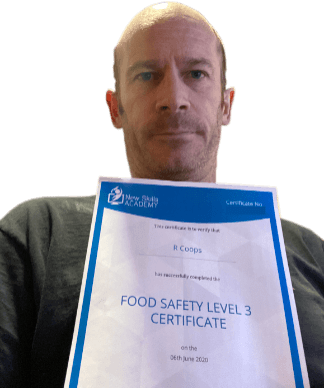
Yet another well laid out course. This is my 3rd course so far with New Skills Academy.
More than likely will be back for another one soon. This course was enjoyable to do, and I learnt a lot and passed first try. My certificate will be up on the wall soon.
Rob Coops
It was an eye opening course that was flexible and easy to access. I was able to complete it from the comfort of my own home whilst also having the tasks to complete which enabled me to check my knowledge. I know feel much more confident in my field of work and really enjoyed doing it.
Ellie Clarke

I found this course incredibly useful, as it provided me with practical knowledge which I can implement in my role as a Support Worker. The videos were clear and concise, and the downloadable worksheets reinforced what I had learned as I was able to put pen to paper. Overall, a fantastic course for a great price! I am looking forward to taking on my next one.
Teleisha Harley

Wow what an incredible insight for the start of anyone's journey in property. This course gives you so much information and there are tests and questions on each of the modules. The course is very easy to follow and well laid out. You can actually make notes on the pages of each module using the notes tab! I am very excited to say that I passed and I only spent one week on this course. I will print all the PDF information and keep it in a file with my certificate. I feel very confident for my future plans now I have completed this course.
Nichola Anderson

The course was clearly set out with helpful end of week tests which built my knowledge. Being dyslexic I found the course was set out in an easy to understand way. I was able to pass the test on my first attempt. The downloaded pdf are a useful resource that you can keep forever. Looking forward to the next course
Ross Dunsten
This is a great course for any level of knowledge. Very easy to navigate, great practical tasks and explanations are very clear. You can revise any module with no problem. The test wasn’t too hard if you completed every module. It may be handy to make some notes before you start. Overall I'm very happy with my choice. Thank you New skills for my New skills :)
Julia Bobkova