Learning Blog
Career opportunities to work with people with Asperger’s

Written by Lizzie Learn
On 23rd Feb 2017
 As the mother of a child with a diagnosis of high functioning autism and another who is an undiagnosed female Aspie I have found my own (somewhat aspie) life enriched by the world of Asperger's.
I take nothing for granted and have been given a wonderful opportunity to see the world from more than one perspective. I had the experience of using Applied Behaviour Analysis before it was invented to toilet train my son amongst other things.
I have spent a good chunk of the last 18 years working as a specialist teacher working with young people many of whom had issues related to Asperger's or ADHD which caused them difficulties in school. I can honestly say it was the best type of work I have ever done. And even now, having taken early retirement from teaching I am, together with writing material like this, still working as a mentor in a university supporting young people in that setting who have Asperger's
So if you too, having been inspired by this course or your experiences of Asperger's what opportunities are there for you?
Well it all depends on how far down an existing career path you are, your educational and experience profile and your interests.
As the mother of a child with a diagnosis of high functioning autism and another who is an undiagnosed female Aspie I have found my own (somewhat aspie) life enriched by the world of Asperger's.
I take nothing for granted and have been given a wonderful opportunity to see the world from more than one perspective. I had the experience of using Applied Behaviour Analysis before it was invented to toilet train my son amongst other things.
I have spent a good chunk of the last 18 years working as a specialist teacher working with young people many of whom had issues related to Asperger's or ADHD which caused them difficulties in school. I can honestly say it was the best type of work I have ever done. And even now, having taken early retirement from teaching I am, together with writing material like this, still working as a mentor in a university supporting young people in that setting who have Asperger's
So if you too, having been inspired by this course or your experiences of Asperger's what opportunities are there for you?
Well it all depends on how far down an existing career path you are, your educational and experience profile and your interests.
Here are some ideas:
Clinical & educational psychologists: Are often involved in the diagnosis or assessment of Asperger's/ Autism and other conditions. The positives is that there are often opportunities to do research and you can use your analytical skills. The downside is that you don't often get to know or work with individuals for any length of time so you don't see the “story” just a snapshot. The brilliant Educational Psychologist who assessed my son at 10 and confirmed the fact that he was bright, just differently bright never got to see what a wonderful boy my son grew into although, because he and I worked together, I kept him posted. Therapies known as PAM's (Professions allied to medicine) including speech and language therapy and occupational therapy: An appropriate degree or post-graduate qualification is a pre-requisite. SLT's and OT's often do assessments and provide supervised interventions for children with Asperger's and ASD (together with other difficulties) which are usually managed day to day in school, at home or both. OT's concentrate on movement and daily living skills including co-ordination issues, whereas SLT's focus on language and communication issues which can include the use of social communication. It was a speech and language therapist who introduced me to the SULP programme which I used with schools to support children with Asperger's and other social difficulties. Portage services: These services provide support to families in their own homes when young children are seen not to be developing normally or are affected by developmental delay of physical issues. There is an opportunity to work with a small group of families until their child or children start school. The work is highly valued by the families which receive it. Teaching assistant or SEN teacher in a mainstream school: Most children with a diagnosis of Asperger's Syndrome attend mainstream school as do many with High Functioning Autism. As a SENCo (Special Educational Needs Co-ordinator) you would have to be a qualified teacher and your job would be to plan strategies to help children get the most out of their education. As a teaching assistant you might be allocated one or two children to work with and if you are lucky, you might get to work with a child with Asperger's over a number of years, supporting their academic and their social development perhaps using some of the material mentioned in this course. As a specialist teacher I trained quite a few teaching assistants to use social stories and social skills groups. The teaching assistant who supported my son from 4-11 was brilliant, clever and helped him using the SULP programme. She got lots of additional training and now has become a specialist assistant for children with Asperger's. Because we live in a village she has the bonus of still seeing him, now as a grown young man and she can enjoy the fruits of her labours. Jobs are usually advertised on local government websites or the local press or in the Times Educational Supplement (online jobs pages). Volunteering in a school substantially increases the chances of getting paid work. Teacher or teaching Assistant in a special school: Most urban areas have at least one school supporting children on the spectrum. Unlike mainstream schools, class sizes are small and the pastoral element of the school is strong. My son went to a special school for his secondary education. Despite quite extreme literacy difficulties, he gained 2 GCSE's in maths and science and what is more important he gained confidence from being educated with his peers and now has a job and his own car. Jobs are usually advertised on local government websites or the local press or in the Times Educational Supplement (online jobs pages) Academic Mentor At sixth forms and increasingly at university, working with young people with Asperger's. The work is often part-time and because of University terms, crammed into certain months. My work as a mentor includes advocacy for students, helping to support them in activities which cause anxiety, work planning, helping them manage perfectionism. I can honestly say there are not two days alike. These posts can be advertised via the institution concerned or through third party agencies such as the National Autistic Society. The charity jobsite (www.charityjob.co.uk ) is a good source of such jobs Parent Support Agencies: Depending on where you live in the country there are many charities which offer support to families caring for children with Asperger's and Autism. The support ranges from helping parents get benefits, to providing activities for children outside school hours. In our local area they organise Autism friendly screenings at the cinema, trips to the ice rink etc. Sometimes their focus is ASD sometimes wider. Employment Support: In my view this is a very underdeveloped area of support at the present time. Having work is good for most people. It provides a solid sense of identity (what do you do? Is often a first question at meeting someone new) and opportunities for young people with Asperger's and HFA to be truly independent of their families. Society too values people who can make an economic contribution. Many people with HFA and Asperger's seem to be caught in between the people who are not expected to get a job because of disability and the people who are struggling because of disadvantage to get into regular (not zero hours) employment. Providing young people who have Asperger's or HFA with real training to help them overcome selection prejudices and working with employers to help them realise what an asset a person with Asperger's can become could be an answer to this seemingly intractable problem. Our experience of this has been very poor where we live the local agencies appear not to have trained or qualified staff and the job club my son was sent to was a joke. In the end he obtained a job by sheer persistence and going into an interview with a local food manufacturer and demonstrating his research about the company and his enthusiasm to work for them. There does however, seem to be more support in the large conurbation areas such as The West Midlands, Home Counties and Greater Manchester. There is a real opportunity for skilled, motivated and knowledgeable people to make a difference here. Independent living support: Supporting people to be able to live in their own homes as independently as they want to. A career in supporting people with ASD is worthwhile and rewarding though not particularly well paid. Help offered can include everything from acting in a secretariat function to helping people get organised for daily living to advocacy and organising a social life. Sometime it might also be acting as an advocate and providing housing and accommodation support. Again in our local area the Local authority and charities have organised supported living accommodation without it seems much consultation with either people with Asperger's or HFA. Located in larger towns in a rural area, for the convenience of service delivery rather than the individual, it ignored the possibility that a person with Asperger's or HFA might not want to live if a “group” home or flats in an Asperger's monoculture! There are many other possibilities for working with people who have high functioning ASD, which are not listed here, my own favourite which I might have tried myself if I were at a different stage of my career would be establishing a business which helps and supports young people with HFA and Asperger's who want to meet other people and date. After all we have “uniform dating” so why not “Aspie Dating”? Online support too, for Aspies suffering from organisational issues and anxiety could also be a break out business, and these are just my ideas.Learn with confidence...

 RRP
$100
RRP
$100
Get a FREE Course
Tick this box to Sign up for our newsletter, and get access to the Interview Skills and CV Writing Certificate course for free! By signing up, you agree to our Privacy Notice & Cookie Policy and to receive marketing and related emails from academy+ brands. You can unsubscribe at any time.What our students say about us...

Fantastic course! Well-presented and challenging with frequent assessments. I feel a serious sense of accomplishment having not studied for over 30 years! Videos that accompany each module are carefully thought out and informative. Am so impressed with this course, have now signed up for 3 other courses and recommending New Skills Academy to everyone!
Marva Hudson

This course is a great way to brush up on my rusty excel skills, I recommend this course to anyone looking for something to do during lockdown, it's easy to use and talks you through each stage step by step. It has given me the confidence I need to further my career.
Georgia Darke
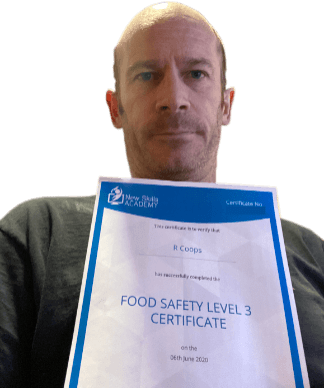
Yet another well laid out course. This is my 3rd course so far with New Skills Academy.
More than likely will be back for another one soon. This course was enjoyable to do, and I learnt a lot and passed first try. My certificate will be up on the wall soon.
Rob Coops

I am a doctor. This course is well organized, covering all areas of CBT. The videos and practical tips are very helpful. All the modules are arranged with good explanations and examples. Also each module consists of quick test and assignment which enables you to gain knowledge. Finally I would like to thank the New Skills Academy team.
Dr. M. Arshad

I took up this course initially to help me with my own dog, but found that as I worked through the material I actually started thinking that this could be something that I could use to make a second income. From start to finish I found the course engaging and interesting. I am now doing another dog related course and am experiencing the same level of enjoyment. I would recommend New Skills Academy without hesitation.
Keith Smith

Wow what an incredible insight for the start of anyone's journey in property. This course gives you so much information and there are tests and questions on each of the modules. The course is very easy to follow and well laid out. You can actually make notes on the pages of each module using the notes tab! I am very excited to say that I passed and I only spent one week on this course. I will print all the PDF information and keep it in a file with my certificate. I feel very confident for my future plans now I have completed this course.
Nichola Anderson
Lovely course for people who want to know the basics and of sign language. It's has helped me to get more of an understanding and will greatly benefit me in my workplace. So easy to pick up and the videos were easy to understand. Would definitely recommend to anyone.
Chloe Hambly

Omg im so excited, over joyed and all the good stuff that comes to mind! Wonderful experience doing lessons with New Skills Academy. I look foward to doing more courses with them. I hope this will encourage others to come on board and refresh your minds or to learn something new, it's a win win situation. I want to thank New Skills Academy so much for making this as simple as possible for me.
Shari Anderson