Learning Blog
Nature vs. Nurture in Bullying Behaviour

Written by Lizzie Learn
On 9th Feb 2017

Introduction
The issue of bullying is a very prominent part of a child's life, with one out of two admitting to having been a victim of bullying at some point in their lives and eight out of 10 admitting to having been involved in some sort of a bullying scenario. Society, local communities, schools and parents would have a hard time ignoring this issue - even more so, when it is highly likely that they experienced it themselves. A natural question arises - why do bullies become bullies? Were they born angry and abusive? What factors in their environment triggered such behaviour? How do we even characterise a bully? Imagine getting a call from the head teacher's office one day, informing you that your child has been bullying others. What do you do then?Characteristics of bullies and anti-bullying policies
Bullying behaviour can be observed in a variety of individuals, yet there are some common characteristics which present very frequently: * Lack of bond-forming and social problem solving skills. * Poor academic performance. * Negative attitudes and beliefs directed towards other people, the school system and themselves. * Rejection and isolation from peers. * Subjection to negative influences by peers. Additionally, it has been found that age and gender affect the precedence of bullying behaviour, with younger people acting out negatively more often and boys bullying more than girls. Spending time trying to address each of the above in isolation would be like treating the symptoms of a disease, without understanding the root cause. Many anti-bullying programs used in schools and communities do exactly that - use strategies that remove the bully, encourage peer-reporting of their behaviour and enforce anti-bullying rules. However effective in the short term, such an approach does not consider nor address the true reasons behind bullying behaviour.What does family have to do with it?
Whether we like it or not, our early childhood experiences tend to shape who we are, who we become and how we treat other people. This applies directly to bullies, as well. Here are five types of behaviour commonly found in bullies and the actions their behaviour links to within the family setting.They do what their parents do
Unsurprisingly, some bullies model themselves on the behaviour they have observed at home. Whether it is their parents abusing them, or each other, the child can grow to think this is normal behaviour and that it is acceptable to act this way towards others. A great example of such type of bullying was presented in the movie “The Butterfly Effect”, where the sadistic brother of the protagonist's girlfriend would imitate the disrespectful and abusive behaviour he observed from his father. However, when put in the situation of a loving family environment, he'd grow up to be a caring and respectful brother, friend and community member.Lack of power
It is a well known fact that bullying behaviour is actually an undercover expression of powerlessness. A bully would do everything to assert their power over the subject who is on the receiving end of their abuse. This frequently stems from a feeling of helplessness and lack of power at home. Every child wants and needs to receive bountiful attention, love and care, in order to grow up as a functional and well socialised human being. If the child has often been abused, mistreated, ignored, or scared at home, there is a chance they may try to claim back their power by dominating others in a cruel and unfair way.The cloak of invisibility
Children who do not get enough affection and attention and who tend to feel invisible at home are more prone to becoming bullies. The child/parent dynamic is a foundational one to each person's individuality, mental health and sense of identity. We all crave our parents' approval, love and affection, from the day we are born to the day we die. Someone once said: “If you want to change the world, go back home and love your family”. In some sense, truer words have not been spoken. Many bullying incidents and antisocial behaviour could be avoided, ameliorated and transformed, if more love, attention and focus were introduced in every family. Parenting and caregiver schools could increase the awareness of soon to be parents on these important psychological issues and empower them to create and sustain a healthy family environment.The other side of the coin
Standing on the opposite side of parents who abuse, ignore, or otherwise mistreat their children, is the category of family dynamics, where the child is given everything they want at all times, without rules and limitations - thus enabling them to grow up with a feeling of absolute entitlement. That can sometimes result in the child feeling a sense of “all-powerfulness”, believing the world and other people are their servants and they can do whatever they wish. A particular type of bullying behaviour could be based on such flawed psychology. Again, it all comes down to balance - sway too far away from the healthy midpoint and the balancing powers bring negative outcomes. Such overly entitled children feel they have the innate right to bully anyone, including their own parents. Measures should be taken to correct such abnormal behaviour.Lack of empathy
There are cases where children who become bullies are shown to have a complete lack of empathy - i.e. are completely unable to relate to the feelings of other human beings and how their actions can impact them. The reasons for this could range from a deficiency that can be turned around with education and training, to psychopathic disorders that can be realised and diagnosed by a professional. Lack of empathy can further develop into more serious antisocial and possibly even criminal behaviours. Such individuals simply do not understand the importance and nature of human emotion and lack the ability to share the feelings of others.Discussion
Whatever the cause of the bullying behaviour, it is critical to remember that children remain children and the reasons behind their wrongdoings should be unemotionally explored, analysed and attended to in a loving and constructive way. Punishing bullies or isolating them even further could deepen the underlying feelings of hurt, loneliness and social inaptness, which often lay the foundations for bullying behaviour. Let's treat bullying as a symptom - much like a cough, or a headache - but instead of administering medicine to get rid of the symptom, discover together what lead to it and uproot the cause. Love, together with constructive guidance and education made available to all affected parties, could greatly improve the prospect of transforming bullies into perfectly healthy, socially prosperous and functional adults.Learn with confidence...



 RRP
$100
RRP
$100
Get a FREE Course
Tick this box to Sign up for our newsletter, and get access to the Interview Skills and CV Writing Certificate course for free! By signing up, you agree to our Privacy Notice & Cookie Policy and to receive marketing and related emails from academy+ brands. You can unsubscribe at any time.What our students say about us...

Wow what an incredible insight for the start of anyone's journey in property. This course gives you so much information and there are tests and questions on each of the modules. The course is very easy to follow and well laid out. You can actually make notes on the pages of each module using the notes tab! I am very excited to say that I passed and I only spent one week on this course. I will print all the PDF information and keep it in a file with my certificate. I feel very confident for my future plans now I have completed this course.
Nichola Anderson

The course was clearly set out with helpful end of week tests which built my knowledge. Being dyslexic I found the course was set out in an easy to understand way. I was able to pass the test on my first attempt. The downloaded pdf are a useful resource that you can keep forever. Looking forward to the next course
Ross Dunsten

Omg im so excited, over joyed and all the good stuff that comes to mind! Wonderful experience doing lessons with New Skills Academy. I look foward to doing more courses with them. I hope this will encourage others to come on board and refresh your minds or to learn something new, it's a win win situation. I want to thank New Skills Academy so much for making this as simple as possible for me.
Shari Anderson
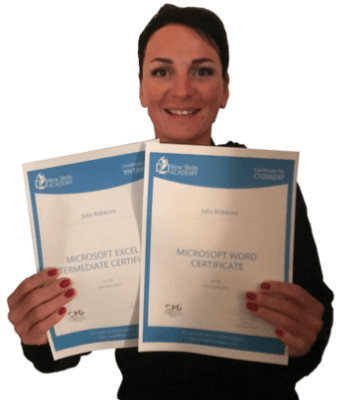
This is a great course for any level of knowledge. Very easy to navigate, great practical tasks and explanations are very clear. You can revise any module with no problem. The test wasn’t too hard if you completed every module. It may be handy to make some notes before you start. Overall I'm very happy with my choice. Thank you New skills for my New skills :)
Julia Bobkova

This course is a great way to brush up on my rusty excel skills, I recommend this course to anyone looking for something to do during lockdown, it's easy to use and talks you through each stage step by step. It has given me the confidence I need to further my career.
Georgia Darke

Very interesting and helpful course. I ve learned a lot of interesting things about make up and the tutorials were very helpful and easy to understand. I really reccomend this course for everyone who is passionate about make up and wish to develop their skills and make a career from their hobby.
Nicoleta Lucaci
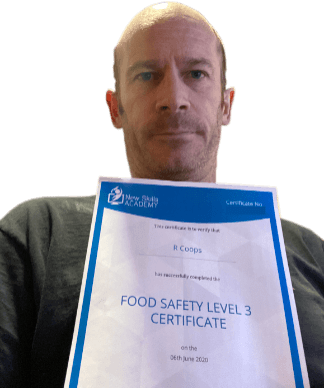
Yet another well laid out course. This is my 3rd course so far with New Skills Academy.
More than likely will be back for another one soon. This course was enjoyable to do, and I learnt a lot and passed first try. My certificate will be up on the wall soon.
Rob Coops
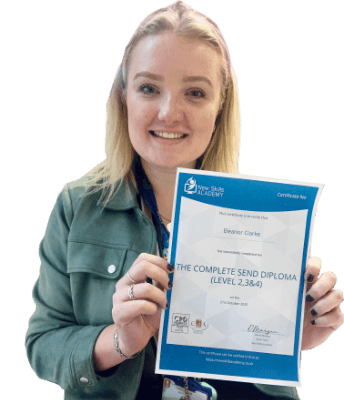
It was an eye opening course that was flexible and easy to access. I was able to complete it from the comfort of my own home whilst also having the tasks to complete which enabled me to check my knowledge. I know feel much more confident in my field of work and really enjoyed doing it.
Ellie Clarke