Learning Blog
Neural Oscillation and Other Curious Frequencies

Written by Lizzie Learn
On 29th Dec 2016
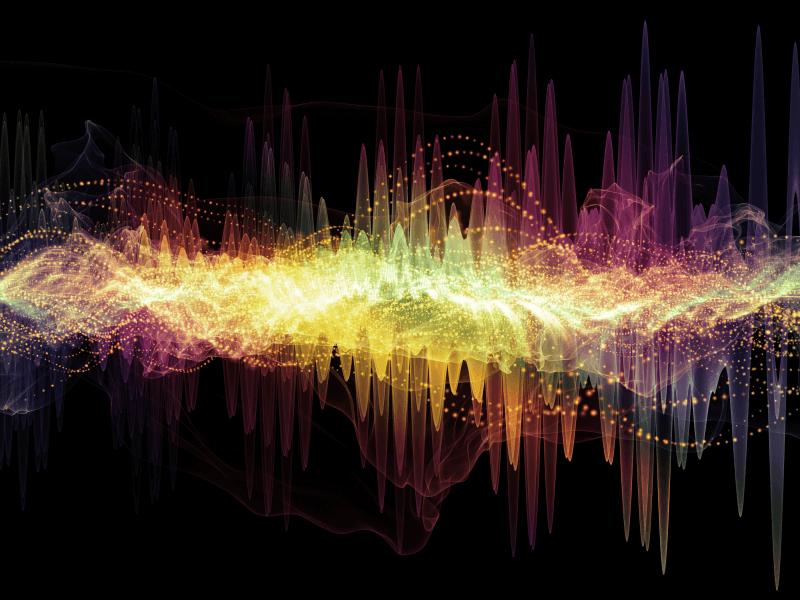 Sound therapy or sound healing has an extensive history. Ancient Egyptians, Greeks and Mayans among others have used sacred sounds for healing ceremonies and religious occasions.
In this article, we will expand on the topic of frequencies and explain what happens in the brain when we listen to sounds.
Sound therapy or sound healing has an extensive history. Ancient Egyptians, Greeks and Mayans among others have used sacred sounds for healing ceremonies and religious occasions.
In this article, we will expand on the topic of frequencies and explain what happens in the brain when we listen to sounds.
Neural Oscillation
It was around the 1920s when a German researcher Hans Bergman noticed that neural activity in the brain was rhythmic and investigated this phenomenon using his invention - the electroencephalography device (EEG) that measures electrical activity. Bergman found what we now call “neural oscillation” or in other words, rhythmic vibrations of the neurons in the brain. Not only did Bergman discover that the brain “vibrated” but he also noticed that vibrations changed depending on the mental state. Hence, Bergman distinguished between four brain states or “waves” that he identified and named after the first four letters in the Greek alphabet. - Alpha waves with 7.5 – 12.5 Hz frequency that our brain emits when it is in an awake but relaxed state. - Beta waves with 12.5 - 30 Hz frequency are brain activity when we are awake, but actively engaging our brain with thinking, speaking, reading or writing. - Gamma waves with 25 - 100 Hz frequency are associated with a type of Zen state such as when we are practising meditation. - Delta waves with 0.5 – 4 Hz frequency are the waves associated with a deep sleep state when we are dreaming. Notable scientists after Hans Bergman discovered there were more than these four states, with subtle frequency bands and waveforms adding Mu, Sigma and Theta waves to the mix.Entrainment and Binaural Beats
The term “entrainment” was first coined by a Dutch physicist Christiaan Huygens in 1665, nearly two centuries before Bergman. It refers to the phenomenon that can be observed when two independent waves with different frequencies can interact with one another if they come in proximity so that after some time of modulation, they will eventually reach an equilibrium state where both frequencies will match. Huygens' discovery sparked great interest because scientists speculated that if brain waves behaved like physical waves, then this principle should explain how the brain manages to modulate sound from the two sound sources, the ears and modulating it into one soundwave in the brain. With Bergen's EEG device researchers were able to test Huygens' hypothesis for the first time and this is how binaural sounds or binaural beats were invented. Binaural music is special in that it must be listened through headphones where different frequency sound is played for each ear. The intended effect is that the two waves will modulate in the brain and make it vibrate at a desired frequency - alpha, beta, gamma or even a custom one. Scientists were convinced that binaural beats had a positive effect on the brain and believed they would be able to use the principle for medicinal and healing purposes.Sacred Frequencies
With decades of research in sound therapy, physicians have examined the effects that individual musical instruments produced and also were curious to test some of the supposedly “sacred” frequencies. One example of a sacred frequency is called the “fundamental frequency” or simply “fundamental” that represents the lowest frequency in a periodic waveform. If this sounds way too complicated, just try imagining hitting a Tibetan bowl or a Japanese gong because these instruments are based on the fundamental frequency. Another example of a sacred frequency was the original six tone Solfeggio Scale developed by the Italian musician Guido of Arezzo who based the six tones on mathematical principles discovered by Pythagoras in Ancient Greece. Some speculate the Solfeggio scale was based on the Bible's numerology which may or may not be true, but it's a fact that the six tones were used by monks to sing sacred Gregorian Chants. In ancient Vedic and Hindu traditions, mantras and chants have strictly defined frequencies at which they must be pronounced in prayers. Did you know that the frequency of the sacred mantra OM should be precisely 7.83 Hz? Clearly, this frequency has not been chosen at random. For the last thousands of years sound healing practices evolved hand in hand with the advancement in scientific discoveries about the wave nature of sound and the mathematics behind music. If you ever wondered why certain music makes you happy, sad, sleepy or ecstatic, then you should know that the frequencies are to blame. On the other hand, some frequencies if utilised properly can elevate our brains into a higher state of being.Learn with confidence...

 RRP
$100
RRP
$100
Get a FREE Course
Tick this box to Sign up for our newsletter, and get access to the Interview Skills and CV Writing Certificate course for free! By signing up, you agree to our Privacy Notice & Cookie Policy and to receive marketing and related emails from academy+ brands. You can unsubscribe at any time.What our students say about us...
Yet another well laid out course. This is my 3rd course so far with New Skills Academy.
More than likely will be back for another one soon. This course was enjoyable to do, and I learnt a lot and passed first try. My certificate will be up on the wall soon.
Rob Coops
Very interesting and helpful course. I ve learned a lot of interesting things about make up and the tutorials were very helpful and easy to understand. I really reccomend this course for everyone who is passionate about make up and wish to develop their skills and make a career from their hobby.
Nicoleta Lucaci

Excellent course, well explained and easy to understand. The course can be done at my own pace and is available on various devices. The layout of the course was excellent and the notes options is very good. The content is perfect and well structured, making it easy to understand and follow. I will definitely be taking more courses in the future.
Luis Costa
Lovely course for people who want to know the basics and of sign language. It's has helped me to get more of an understanding and will greatly benefit me in my workplace. So easy to pick up and the videos were easy to understand. Would definitely recommend to anyone.
Chloe Hambly
This course is a great way to brush up on my rusty excel skills, I recommend this course to anyone looking for something to do during lockdown, it's easy to use and talks you through each stage step by step. It has given me the confidence I need to further my career.
Georgia Darke

Wow what an incredible insight for the start of anyone's journey in property. This course gives you so much information and there are tests and questions on each of the modules. The course is very easy to follow and well laid out. You can actually make notes on the pages of each module using the notes tab! I am very excited to say that I passed and I only spent one week on this course. I will print all the PDF information and keep it in a file with my certificate. I feel very confident for my future plans now I have completed this course.
Nichola Anderson

I found this course incredibly useful, as it provided me with practical knowledge which I can implement in my role as a Support Worker. The videos were clear and concise, and the downloadable worksheets reinforced what I had learned as I was able to put pen to paper. Overall, a fantastic course for a great price! I am looking forward to taking on my next one.
Teleisha Harley
I took up this course initially to help me with my own dog, but found that as I worked through the material I actually started thinking that this could be something that I could use to make a second income. From start to finish I found the course engaging and interesting. I am now doing another dog related course and am experiencing the same level of enjoyment. I would recommend New Skills Academy without hesitation.
Keith Smith