The Complete Child Protection and Safeguarding Diploma


Why you should study with us
Includes the following courses:
Child Neglect Awareness Certificate Child Protection Certificate Child Protection in Sport Certificate Child Sexual Exploitation Awareness Certificate Positive Handling in Schools Certificate Safeguarding Children CertificateThe Complete Child Protection and Safeguarding Diploma Course
All children deserve to live free from fear of mistreatment, neglect and abuse. Unfortunately, thousands of UK children are exploited and abused on a daily basis. Anyone working with children must understand how abuse occurs, how to identify the signs and what to do if you suspect a child is a victim of abuse.
This bundle will equip you with this knowledge, allowing you to safeguard children in your care. If you work in a school, you also need to know how to physically intervene during a serious incident, without violating the child’s rights or compromising their wellbeing.
This bundle will help you understand and implement positive handling in a safe, responsible manner.
What You Will Learn
This combined course includes the following:
- Child Neglect
- Child Protection
- Child Protection In Sport
- Child Sexual Exploitation
- Positive Handling In Schools
- Safeguarding Children
Child Neglect Course
Almost 10% of UK children have experienced, or are currently experiencing, neglect. Neglect can have a profound negative impact on physical, emotional and social development. It can be difficult to identify, especially if the child has become adept at concealing it.
In this course, you will learn about the different forms of neglect, the risk factors that increase a child’s risk of neglect and the signs associated with each type of neglect.You will discover what you should do if you learn that a child is being neglected and how to report any concerns to the authorities.
Child Protection Course
Anyone who works with children has a legal obligation to remain vigilant in detecting and reporting abuse. In short, they must do all they can to protect children from harm. This course includes an overview of the laws designed to protect children and how these translate into everyday practice.
You will learn about the rights of children, as outlined in UK law and the UN Convention on the Rights of the Child.
The course explains how the safeguarding process works, the various forms of abuse children suffer and what parents and professionals can do if they suspect abuse.
Child Protection In Sport Course
If you work in the sports or leisure industries, you may have extensive contact with children and young people. This means that you have important child protection responsibilities. You need to know how to keep children safe from bullying and abuse and how to ensure that sport remains an enjoyable, healthy activity for all children in your care.
This course outlines the risks confronting children today, including bullying and radicalisation. You will learn how good administration practices can keep children safe, how to handle disclosure by a child and how to report abuse.
Child Sexual Exploitation Course
Thousands of UK children are at risk of sexual exploitation. Anyone who works with children and young people must be alert to the dangers and signs of sexual abuse. Often, a perpetrator is someone in a position of trust, although it is increasingly important to be aware of online exploitation and grooming.
This course outlines how and why perpetrators exploit children in this way and how to identify warning signs that a child is being subjected to sexual abuse. You will learn how a child’s behaviour and appearance can alert you to the possibility of abuse and how to respond to reports and allegations of exploitation.
Positive Handling In Schools Course
Student aggression and violence is a widespread concern in the education sector.
Aggressive students may threaten the safety of others, property and themselves. When used appropriately, positive handling is an effective approach that facilitates speedy resolution of tense situations. You learn what positive handling means and when it should be used.
The course addresses the role of the SCARF model in defusing a situation and how the aggression curve can help you decide on the best course of action. It refers to UK legislation and government guidelines that help you judge when and how to intervene.
Safeguarding Children Course
Child abuse has a significant negative impact on an individual’s physical and emotional health. Trauma resulting from abuse can affect victims well into adulthood.
Safeguarding offers a useful framework that helps you understand how and why abuse occurs and how everyone can work together to prevent it.
You will learn about the various forms of child abuse and who is most likely to abuse a child. You will learn how to spot the signs that a child is being mistreated, how to report abuse and how to engage with a child who has been victimised.
The Benefits of Our Child Protection & Safeguarding Bundle
- If you work with children, this bundle will help you ensure their safety and wellbeing.
- If you are responsible for drawing up safeguarding policies at work, this bundle will help you create comprehensive documents that encourage prompt identification and reporting of abuse.
- If you are interested in developmental psychology, this course will help you understand the short and long-term effects of child abuse.
- If you are a parent, this course will help you identify signs of abuse in your child, allowing you to take prompt action.
- If you run an organisation that provides services to children and young people, this bundle will guide you in training all staff and volunteers in child safeguarding practices.
This course includes
24/7 Student Support
End of course certification
Lifetime access to your course
This is a bundle course, and contains the following courses:
Child Neglect Certificate Course
Throughout the UK, nearly 10% of all children are experiencing or have experienced neglect. Living through this type of treatment can affect a person in childhood, as well as all the way through to adulthood.
Unfortunately, neglect is one of the hardest forms of child abuse to recognise, as it can appear subtly. In addition, many children who are neglected hide it as best they can, especially as they get older, and conditions worsen. Being able to identify the risk factors, signs and symptoms of child neglect can help you keep the children in your life safe.
This course goes into detail about child neglect. We begin by talking about the basic forms of neglect, including physical, emotional and educational, and how they manifest. Next, we review the factors that may mean that a child is at a higher risk of being neglected than their peers. A discussion of the warning signs of neglect, including the emotional and behavioural changes that a neglected child may exhibit, follows.
Finally, we review the best practices to keep in mind when responding to disclosures, as well as how you can report your concerns to the authorities.
You Will Learn:
- What the long-term effects of child neglect are
- How to identify children who are at risk by their behaviour and the situation
- The factors that impact how a person responds to child neglect
- The signs and symptoms that mean that you need to examine a child’s situation in closer detail
- What happens after you report your concerns
Benefits of Taking this Course:
- Understanding more about the lifelong impact that neglect can have on a child
- Learning more about the importance of reporting your concerns immediately
- Understanding how neglect occurs and what the risk factors are
- Being able to confidently look out for the children in your life whom you care about
- Learning how to cope with allegations, disclosures and suspicions of neglect
Child Protection Certificate Course
In the UK alone, one in five children have endured severe mistreatment, including various forms of child abuse. The key to preventing future incidents, as well as helping the victims of abuse, is understanding more about it. This knowledge is crucial to have, if there are any children in your life, regardless of your profession. Those engaged in occupations that deal directly with children have a special obligation to look out for the children in their lives, while the rest of us have a moral obligation to protect the children whom we know. This course goes into detail regarding child protection. We begin by giving you an introduction to child protection, including the rights that children have, as laid down by UK law and the UN Convention on the Rights of the Child. We also talk about the various pieces of legislation and government guidance in place that discusses child protection, the safeguarding of children and the roles and responsibilities that agencies play in this process. Next, we review the types of child abuse that may be encountered, along with the possible indicators of each type of abuse. Finally, we review the various ways in which parents and other caregivers can work, to actively protect children from harm.
You Will Learn:
- The importance of child protection across every occupation
- What to do, if you suspect that a child whom you know is being abused or harmed or is in need of protection
- The specific pieces of legislation and government guidance that you can turn to, for more information, in the case of specific incidents
- Additional information on the types of discrimination that children in the UK frequently face
- The specific steps that parents and caregivers can take, to keep children safe, both online and in public
Benefits of Taking this Course
- Understanding when you should contact emergency services regarding a child, and which service is most appropriate
- Becoming more confident in your role as a caregiver or an individual who is actively engaged in a child’s life
- Being able to recognise potential cases of abuse sooner, so that you can immediately seek help for the child
- Understanding more about lesser-known types of abuse, such as emotional abuse and discriminatory abuse
- Feeling better as a parent in terms of your decisions regarding your child’s freedom, both online and in the real world
Child Protection in Sport Certificate Course
Across the UK, nearly 87% of all children have played at least one sport in the last 12 months. This gives those who work and volunteer in the sporting industry a lot of contact and interaction with children. As a result of this extended contact and their position as an authority or trustworthy figure, these individuals have certain child protection responsibilities. Being aware of how to keep children safe when engaged in sports, both from dangers at home and risks from other children, is a key part of fulfilling these responsibilities. This course goes into detail regarding child protection in sport. We begin by giving you an introduction to the topic, including a discussion on the numerous benefits seen by children who are engaged in sport. Next, we talk about the unique risks that face children today, including radicalisation. The course also talks about the signs of child abuse, so that you can keep an eye on the children in your care. Finally, we talk about the administrative steps that all organisations should take to keep children safe.
You Will Learn:
- What steps the adults in a child’s life can take to keep the child safe
- Which groups are most vulnerable to abuse, radicalisation and bullying
- What the reporting process is
- The importance of taking support training
- Which pieces of legislative guidance you should know
Benefits of Taking This Course:
- Understanding more about how to keep the children in your care safe from abuse and harm
- Learning how to create an atmosphere of acceptance and understanding
- Understanding more about the modern day risks faced by children
- Feeling confident about how to respond if a child confides in you about abuse or bullying
- Learning the importance of following high child protection safety standards, even if it is not required for your organisation
Child Sexual Exploitation Awareness Certificate Course
Children are becoming at risk of sexual exploitation at an alarming rate across the UK. In 2016, it was reported that over 4,000 London children were ‘at risk of sexual exploitation’. The perpetrators can be people whom the children already know or the exploitation can result from online sources. The best way in which to keep the children in your life safe from this type of exploitation is to be armed with as much knowledge as possible. Understanding how and why exploitation occurs, as well as who is most likely to be targeted, is the first step in preventing it from happening to your loved ones or children in your care. This course goes into detail regarding child sexual exploitation. We begin by giving you a brief introduction to the topic, including a definition of the term and specific examples. Next, we talk about how child sexual exploitation occurs, including the warning signs that you should look for and the behaviour patterns displayed by those who are most likely to start grooming children. We then discuss the reactions that children have to being exploited. Finally, we review the best practices for responding to and reporting allegations of sexual abuse or exploitation.
You Will Learn:
- The most common models of grooming for sexual exploitation
- The warning signs exhibited by children who may be being sexually exploited
- The emotional and physical effects of sexual exploitation
- The reasons why children may choose not to report incidents of sexual exploitation or abuse
- How to respond if a child in your life discloses sexual exploitation or abuse
Benefits of Taking this Course:
- Understanding about the dangers that sexual exploitation poses to the children in your life
- Learning the importance of creating an atmosphere where a child feels safe and believed
- Understanding about the risks of online grooming and how to combat them
- Learning about the reporting process and why it is best to leave your name when going through the process
- Understanding more about your role and responsibilities in keeping the children in your life safe from harm
Positive Handling in Schools Certificate Course
Teachers and support staff in today’s schools face a lot of aggression from their students. These situations can be very difficult to deal with, especially if the student is particularly aggressive or threatens to cause serious harm to the school, themselves, or others. To mitigate these risks, all schools are required to give teachers and support staff training in positive handling to better help them understand the use of force in schools.
This course provides a comprehensive overview of how to engage in positive handling when the situation requires. It begins by talking about positive handling in general and going over the relevant legislation. It then goes into detail about the government guidelines and advice on this matter. The modules also discuss the aggression curve, giving teachers and support staff valuable information about the best time for intervention. Finally, it gives you the tools you need to make decisions about when you should physically intervene.
You Will Learn:-
- Information about positive handling, including a definition and brief history of it in UK schools.
- The relevant legislation regulating the use of positive handling and physical intervention in schools.
- Guidelines issued by the government, offering more comfort to teachers and staff about positive handling and intervening physically.
- The aggression curve, using the Kaplan-Wheeler diagram to illustrate each phase.
- What the SCARF model is and how you can use it to de-escalate tense or aggressive situations.
- How to make decisions about when to intervene.
Benefits of Taking This Course
- Learning more about positive handling, including when it is appropriate.
- Gaining insight into the relevant legislation and government-issued guidelines and advice.
- Learning about the aggression curve, including the best phases for intervention and the riskiest ones.
- Understanding what the SCARF model is and how it can be used to deescalate a potentially aggressive situation.
- Learning when to use positive handling, physical intervention and physical restraint.
Safeguarding Children Course
Every child has the right to live a life free from abuse. Sadly, many children are mistreated, often by those closest to them.
Child abuse, which takes several different forms, has long-lasting repercussions. For example, adults who have been abused as children are significantly more likely to develop mental health problems. They are also at increased risk of perpetrating abuse against others.
Fortunately, effective safeguarding can prevent child abuse. It also offers a framework that encourages prompt reporting, which can save a child from further suffering.
This course outlines how safeguarding works to support children’s wellbeing, how to identify abuse and what to do if you suspect that a child is being mistreated.
You Will Learn
- What “safeguarding” means, why children are a vulnerable group and who has a responsibility to protect them from harm.
- The different forms child abuse can take, including emotional and sexual abuse.
- How you can identify the most common signs of child abuse.
- What you should do if you know or suspect that a child is being abused.
- Why the internet poses safety risks and how to safeguard children who use the internet.
Benefits Of Taking This Course
- This course is suitable for staff working in education in line with KCSIE guidance.
- If you are responsible for the care of children, whether in your personal or professional life, this course will help you keep them safe.
- If you are considering starting a career in a childcare or education-based field, this course will prepare you to understand and meet your safeguarding duties.
- You will be in a position to help victims of abuse, allowing you to make an enormous difference to their long-term health and wellbeing.
- Your new knowledge will enable you to navigate media discourse and debates around child protection and safeguarding.
- You will be in a position to teach others how to safeguard children.
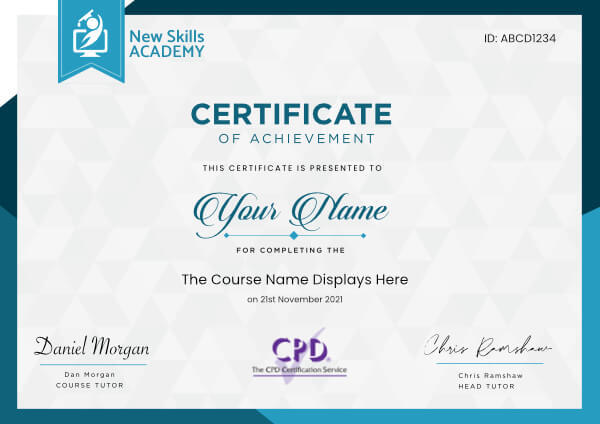
 ID: YDFT67YHJ
of achievement
This certificate is presented to
Your Name

For completing the
The Complete Child Protection and Safeguarding Diploma
on 21st November 2026
Selena Hurford
Selena Hurford
Course Tutor

Daniel Morgan
Daniel Morgan
Head of Academy
Anyone who has an interest in learning more about this subject matter is encouraged to take the course. There are no entry requirements to take the course.
The course is broken down into 0 individual modules. Each module takes between 20 and 90 minutes on average to study. Although you are free to spend as much or as little time as you feel necessary on each module, simply log in and out of the course at your convenience.
You can study the course any time you like. Simply log in and out of the web based course as often as you require. The course is compatible with all computers, tablet devices and smart phones so you can even study while on the move!
Once you have completed all 0 modules there is a multiple choice test. The questions will be on a range of topics found within the 0 modules. The test, like the course, is online and can be taken a time and location of your choosing.
The pass mark for the test is 70%.
If you don’t pass the test first time you will get further opportunities to take the test again after extra study. There are no limits to the number of times you can take the test. All test retakes are included within the price of the course.
You can either use your Visa, MasterCard, American Express, Solo cards or PayPal account to pay for the online course. Our site uses the latest SSL encryption to ensure your safety. All payments are handled securely by PayPal.
You can begin the course immediately after your payment has been received. You will create your login details during the checkout process. We will also send you an email confirming your login details.
How long does it take to complete the The Complete Child Protection and Safeguarding Diploma course?
We estimate that the course will take about 18 hours to complete in total, plus an additional 30 minutes for the end of course test.
Once you have been awarded your certificate it is valid for life. The certificate does not expire or need renewing.
The course was very useful. It covers everything you need starting from the introduction to the comments. Everything was explained in a way to understand easily each one module of it. I really liked the pivot table module.
It is so helpful, don’t know how I lived until now without it at work. It is just amazing. I am so glad that I started the course and I am proud of myself that I did it in a such a short time.
Thank you for this. Can’t wait to start the next one – intermediate level! Hopefully I will pass it. And who knows – maybe after that I will pass the advanced one.

Eleonora Kanazirova
Great course!!I have learnt everything I need to become a nail technician!with many photos and videos and with many instructions leaves you with no questions at all!!I definitely suggest this course!!

Kiriaki Mitrou
This course was easy to read. I could take as long as I needed and go at my own pace and I was surprised to find that this was an accredited course recognised by my employer. It does what it says on the tin.
I would recommend to anybody wanting to gain knowledge in this area, to add to your education section on your CV or even just for fun! The certificate now looks nice in my achievements folder.
I would most definitely enrol in this way of learning again when I am ready to learn another new subject.

Stacey Cowan
Great course. Easily readable online, no jargon and had up to date information and illustrations as well as the sources that were used within the modules. Most modules had an assessment at the end where you could check your own knowledge - this was a great add on to ensure you are up to speed. The exam was easily laid out great with no tricky to read questions. The completion certificate was easily accessible on completion and you are given your grade immediately after the exam - it even gives you the option to see your incorrect answers so you can review them in your own leisure. All of the modules are printable so you can ready back as often as you like. Not only this, but throughout the whole course, you have the ability to email representatives of the course who will answer any questions you may have and they are very prompt with their responses. I was overall very happy with this course and will definitely keep New Skills Academy in mind when taking future course. Thank you!

Gemma Johnston
I have just complete the nail technician diploma award and delivered professional manicures and nail extensions to my friends and family who are very pleased with their treatments! The course was easy to follow and fun to do!

Fiona Baker
I was already quite proficient in many areas that this course covers as I have worked similar jobs before but felt I could benefit from a qualification. This is a very in depth course that covers all areas of being a personal assistant, even ones that I wouldn’t have ever considered needing to learn.
The in-depth learning has built my confidence to put myself out there and try to get back into this career path. I particularly found the section on faxing to be very useful as it’s something that is done in most offices that I’ve found it difficult to come to grips with in the past.
I am already eyeing up more courses on the site and will be sure to give them a try soon.

Maria Casey
The Complete Child Protection and Safeguarding Diploma Course
All children deserve to live free from fear of mistreatment, neglect and abuse. Unfortunately, thousands of UK children are exploited and abused on a daily basis. Anyone working with children must understand how abuse occurs, how to identify the signs and what to do if you suspect a child is a victim of abuse.
This bundle will equip you with this knowledge, allowing you to safeguard children in your care. If you work in a school, you also need to know how to physically intervene during a serious incident, without violating the child’s rights or compromising their wellbeing.
This bundle will help you understand and implement positive handling in a safe, responsible manner.
What You Will Learn
This combined course includes the following:
- Child Neglect
- Child Protection
- Child Protection In Sport
- Child Sexual Exploitation
- Positive Handling In Schools
- Safeguarding Children
Child Neglect Course
Almost 10% of UK children have experienced, or are currently experiencing, neglect. Neglect can have a profound negative impact on physical, emotional and social development. It can be difficult to identify, especially if the child has become adept at concealing it.
In this course, you will learn about the different forms of neglect, the risk factors that increase a child’s risk of neglect and the signs associated with each type of neglect.You will discover what you should do if you learn that a child is being neglected and how to report any concerns to the authorities.
Child Protection Course
Anyone who works with children has a legal obligation to remain vigilant in detecting and reporting abuse. In short, they must do all they can to protect children from harm. This course includes an overview of the laws designed to protect children and how these translate into everyday practice.
You will learn about the rights of children, as outlined in UK law and the UN Convention on the Rights of the Child.
The course explains how the safeguarding process works, the various forms of abuse children suffer and what parents and professionals can do if they suspect abuse.
Child Protection In Sport Course
If you work in the sports or leisure industries, you may have extensive contact with children and young people. This means that you have important child protection responsibilities. You need to know how to keep children safe from bullying and abuse and how to ensure that sport remains an enjoyable, healthy activity for all children in your care.
This course outlines the risks confronting children today, including bullying and radicalisation. You will learn how good administration practices can keep children safe, how to handle disclosure by a child and how to report abuse.
Child Sexual Exploitation Course
Thousands of UK children are at risk of sexual exploitation. Anyone who works with children and young people must be alert to the dangers and signs of sexual abuse. Often, a perpetrator is someone in a position of trust, although it is increasingly important to be aware of online exploitation and grooming.
This course outlines how and why perpetrators exploit children in this way and how to identify warning signs that a child is being subjected to sexual abuse. You will learn how a child’s behaviour and appearance can alert you to the possibility of abuse and how to respond to reports and allegations of exploitation.
Positive Handling In Schools Course
Student aggression and violence is a widespread concern in the education sector.
Aggressive students may threaten the safety of others, property and themselves. When used appropriately, positive handling is an effective approach that facilitates speedy resolution of tense situations. You learn what positive handling means and when it should be used.
The course addresses the role of the SCARF model in defusing a situation and how the aggression curve can help you decide on the best course of action. It refers to UK legislation and government guidelines that help you judge when and how to intervene.
Safeguarding Children Course
Child abuse has a significant negative impact on an individual’s physical and emotional health. Trauma resulting from abuse can affect victims well into adulthood.
Safeguarding offers a useful framework that helps you understand how and why abuse occurs and how everyone can work together to prevent it.
You will learn about the various forms of child abuse and who is most likely to abuse a child. You will learn how to spot the signs that a child is being mistreated, how to report abuse and how to engage with a child who has been victimised.
The Benefits of Our Child Protection & Safeguarding Bundle
- If you work with children, this bundle will help you ensure their safety and wellbeing.
- If you are responsible for drawing up safeguarding policies at work, this bundle will help you create comprehensive documents that encourage prompt identification and reporting of abuse.
- If you are interested in developmental psychology, this course will help you understand the short and long-term effects of child abuse.
- If you are a parent, this course will help you identify signs of abuse in your child, allowing you to take prompt action.
- If you run an organisation that provides services to children and young people, this bundle will guide you in training all staff and volunteers in child safeguarding practices.
This course includes
24/7 Student Support
End of course certification
Lifetime access to your course
This is a bundle course, and contains the following courses:
Child Neglect Certificate Course
Throughout the UK, nearly 10% of all children are experiencing or have experienced neglect. Living through this type of treatment can affect a person in childhood, as well as all the way through to adulthood.
Unfortunately, neglect is one of the hardest forms of child abuse to recognise, as it can appear subtly. In addition, many children who are neglected hide it as best they can, especially as they get older, and conditions worsen. Being able to identify the risk factors, signs and symptoms of child neglect can help you keep the children in your life safe.
This course goes into detail about child neglect. We begin by talking about the basic forms of neglect, including physical, emotional and educational, and how they manifest. Next, we review the factors that may mean that a child is at a higher risk of being neglected than their peers. A discussion of the warning signs of neglect, including the emotional and behavioural changes that a neglected child may exhibit, follows.
Finally, we review the best practices to keep in mind when responding to disclosures, as well as how you can report your concerns to the authorities.
You Will Learn:
- What the long-term effects of child neglect are
- How to identify children who are at risk by their behaviour and the situation
- The factors that impact how a person responds to child neglect
- The signs and symptoms that mean that you need to examine a child’s situation in closer detail
- What happens after you report your concerns
Benefits of Taking this Course:
- Understanding more about the lifelong impact that neglect can have on a child
- Learning more about the importance of reporting your concerns immediately
- Understanding how neglect occurs and what the risk factors are
- Being able to confidently look out for the children in your life whom you care about
- Learning how to cope with allegations, disclosures and suspicions of neglect
Child Protection Certificate Course
In the UK alone, one in five children have endured severe mistreatment, including various forms of child abuse. The key to preventing future incidents, as well as helping the victims of abuse, is understanding more about it. This knowledge is crucial to have, if there are any children in your life, regardless of your profession. Those engaged in occupations that deal directly with children have a special obligation to look out for the children in their lives, while the rest of us have a moral obligation to protect the children whom we know. This course goes into detail regarding child protection. We begin by giving you an introduction to child protection, including the rights that children have, as laid down by UK law and the UN Convention on the Rights of the Child. We also talk about the various pieces of legislation and government guidance in place that discusses child protection, the safeguarding of children and the roles and responsibilities that agencies play in this process. Next, we review the types of child abuse that may be encountered, along with the possible indicators of each type of abuse. Finally, we review the various ways in which parents and other caregivers can work, to actively protect children from harm.
You Will Learn:
- The importance of child protection across every occupation
- What to do, if you suspect that a child whom you know is being abused or harmed or is in need of protection
- The specific pieces of legislation and government guidance that you can turn to, for more information, in the case of specific incidents
- Additional information on the types of discrimination that children in the UK frequently face
- The specific steps that parents and caregivers can take, to keep children safe, both online and in public
Benefits of Taking this Course
- Understanding when you should contact emergency services regarding a child, and which service is most appropriate
- Becoming more confident in your role as a caregiver or an individual who is actively engaged in a child’s life
- Being able to recognise potential cases of abuse sooner, so that you can immediately seek help for the child
- Understanding more about lesser-known types of abuse, such as emotional abuse and discriminatory abuse
- Feeling better as a parent in terms of your decisions regarding your child’s freedom, both online and in the real world
Child Protection in Sport Certificate Course
Across the UK, nearly 87% of all children have played at least one sport in the last 12 months. This gives those who work and volunteer in the sporting industry a lot of contact and interaction with children. As a result of this extended contact and their position as an authority or trustworthy figure, these individuals have certain child protection responsibilities. Being aware of how to keep children safe when engaged in sports, both from dangers at home and risks from other children, is a key part of fulfilling these responsibilities. This course goes into detail regarding child protection in sport. We begin by giving you an introduction to the topic, including a discussion on the numerous benefits seen by children who are engaged in sport. Next, we talk about the unique risks that face children today, including radicalisation. The course also talks about the signs of child abuse, so that you can keep an eye on the children in your care. Finally, we talk about the administrative steps that all organisations should take to keep children safe.
You Will Learn:
- What steps the adults in a child’s life can take to keep the child safe
- Which groups are most vulnerable to abuse, radicalisation and bullying
- What the reporting process is
- The importance of taking support training
- Which pieces of legislative guidance you should know
Benefits of Taking This Course:
- Understanding more about how to keep the children in your care safe from abuse and harm
- Learning how to create an atmosphere of acceptance and understanding
- Understanding more about the modern day risks faced by children
- Feeling confident about how to respond if a child confides in you about abuse or bullying
- Learning the importance of following high child protection safety standards, even if it is not required for your organisation
Child Sexual Exploitation Awareness Certificate Course
Children are becoming at risk of sexual exploitation at an alarming rate across the UK. In 2016, it was reported that over 4,000 London children were ‘at risk of sexual exploitation’. The perpetrators can be people whom the children already know or the exploitation can result from online sources. The best way in which to keep the children in your life safe from this type of exploitation is to be armed with as much knowledge as possible. Understanding how and why exploitation occurs, as well as who is most likely to be targeted, is the first step in preventing it from happening to your loved ones or children in your care. This course goes into detail regarding child sexual exploitation. We begin by giving you a brief introduction to the topic, including a definition of the term and specific examples. Next, we talk about how child sexual exploitation occurs, including the warning signs that you should look for and the behaviour patterns displayed by those who are most likely to start grooming children. We then discuss the reactions that children have to being exploited. Finally, we review the best practices for responding to and reporting allegations of sexual abuse or exploitation.
You Will Learn:
- The most common models of grooming for sexual exploitation
- The warning signs exhibited by children who may be being sexually exploited
- The emotional and physical effects of sexual exploitation
- The reasons why children may choose not to report incidents of sexual exploitation or abuse
- How to respond if a child in your life discloses sexual exploitation or abuse
Benefits of Taking this Course:
- Understanding about the dangers that sexual exploitation poses to the children in your life
- Learning the importance of creating an atmosphere where a child feels safe and believed
- Understanding about the risks of online grooming and how to combat them
- Learning about the reporting process and why it is best to leave your name when going through the process
- Understanding more about your role and responsibilities in keeping the children in your life safe from harm
Positive Handling in Schools Certificate Course
Teachers and support staff in today’s schools face a lot of aggression from their students. These situations can be very difficult to deal with, especially if the student is particularly aggressive or threatens to cause serious harm to the school, themselves, or others. To mitigate these risks, all schools are required to give teachers and support staff training in positive handling to better help them understand the use of force in schools.
This course provides a comprehensive overview of how to engage in positive handling when the situation requires. It begins by talking about positive handling in general and going over the relevant legislation. It then goes into detail about the government guidelines and advice on this matter. The modules also discuss the aggression curve, giving teachers and support staff valuable information about the best time for intervention. Finally, it gives you the tools you need to make decisions about when you should physically intervene.
You Will Learn:-
- Information about positive handling, including a definition and brief history of it in UK schools.
- The relevant legislation regulating the use of positive handling and physical intervention in schools.
- Guidelines issued by the government, offering more comfort to teachers and staff about positive handling and intervening physically.
- The aggression curve, using the Kaplan-Wheeler diagram to illustrate each phase.
- What the SCARF model is and how you can use it to de-escalate tense or aggressive situations.
- How to make decisions about when to intervene.
Benefits of Taking This Course
- Learning more about positive handling, including when it is appropriate.
- Gaining insight into the relevant legislation and government-issued guidelines and advice.
- Learning about the aggression curve, including the best phases for intervention and the riskiest ones.
- Understanding what the SCARF model is and how it can be used to deescalate a potentially aggressive situation.
- Learning when to use positive handling, physical intervention and physical restraint.
Safeguarding Children Course
Every child has the right to live a life free from abuse. Sadly, many children are mistreated, often by those closest to them.
Child abuse, which takes several different forms, has long-lasting repercussions. For example, adults who have been abused as children are significantly more likely to develop mental health problems. They are also at increased risk of perpetrating abuse against others.
Fortunately, effective safeguarding can prevent child abuse. It also offers a framework that encourages prompt reporting, which can save a child from further suffering.
This course outlines how safeguarding works to support children’s wellbeing, how to identify abuse and what to do if you suspect that a child is being mistreated.
You Will Learn
- What “safeguarding” means, why children are a vulnerable group and who has a responsibility to protect them from harm.
- The different forms child abuse can take, including emotional and sexual abuse.
- How you can identify the most common signs of child abuse.
- What you should do if you know or suspect that a child is being abused.
- Why the internet poses safety risks and how to safeguard children who use the internet.
Benefits Of Taking This Course
- This course is suitable for staff working in education in line with KCSIE guidance.
- If you are responsible for the care of children, whether in your personal or professional life, this course will help you keep them safe.
- If you are considering starting a career in a childcare or education-based field, this course will prepare you to understand and meet your safeguarding duties.
- You will be in a position to help victims of abuse, allowing you to make an enormous difference to their long-term health and wellbeing.
- Your new knowledge will enable you to navigate media discourse and debates around child protection and safeguarding.
- You will be in a position to teach others how to safeguard children.
ID: YDFT67YHJ
of achievement
This certificate is presented to
Your Name
For completing the
The Complete Child Protection and Safeguarding Diploma
on 21st November 2026
Selena Hurford
Selena Hurford
Course Tutor
Daniel Morgan
Daniel Morgan
Head of Academy
Anyone who has an interest in learning more about this subject matter is encouraged to take the course. There are no entry requirements to take the course.
The course is broken down into 0 individual modules. Each module takes between 20 and 90 minutes on average to study. Although you are free to spend as much or as little time as you feel necessary on each module, simply log in and out of the course at your convenience.
You can study the course any time you like. Simply log in and out of the web based course as often as you require. The course is compatible with all computers, tablet devices and smart phones so you can even study while on the move!
Once you have completed all 0 modules there is a multiple choice test. The questions will be on a range of topics found within the 0 modules. The test, like the course, is online and can be taken a time and location of your choosing.
The pass mark for the test is 70%.
If you don’t pass the test first time you will get further opportunities to take the test again after extra study. There are no limits to the number of times you can take the test. All test retakes are included within the price of the course.
You can either use your Visa, MasterCard, American Express, Solo cards or PayPal account to pay for the online course. Our site uses the latest SSL encryption to ensure your safety. All payments are handled securely by PayPal.
You can begin the course immediately after your payment has been received. You will create your login details during the checkout process. We will also send you an email confirming your login details.
How long does it take to complete the The Complete Child Protection and Safeguarding Diploma course?
We estimate that the course will take about 18 hours to complete in total, plus an additional 30 minutes for the end of course test.
Once you have been awarded your certificate it is valid for life. The certificate does not expire or need renewing.
The course was very useful. It covers everything you need starting from the introduction to the comments. Everything was explained in a way to understand easily each one module of it. I really liked the pivot table module.
It is so helpful, don’t know how I lived until now without it at work. It is just amazing. I am so glad that I started the course and I am proud of myself that I did it in a such a short time.
Thank you for this. Can’t wait to start the next one – intermediate level! Hopefully I will pass it. And who knows – maybe after that I will pass the advanced one.
Eleonora Kanazirova
Great course!!I have learnt everything I need to become a nail technician!with many photos and videos and with many instructions leaves you with no questions at all!!I definitely suggest this course!!
Kiriaki Mitrou
This course was easy to read. I could take as long as I needed and go at my own pace and I was surprised to find that this was an accredited course recognised by my employer. It does what it says on the tin.
I would recommend to anybody wanting to gain knowledge in this area, to add to your education section on your CV or even just for fun! The certificate now looks nice in my achievements folder.
I would most definitely enrol in this way of learning again when I am ready to learn another new subject.
Stacey Cowan
Great course. Easily readable online, no jargon and had up to date information and illustrations as well as the sources that were used within the modules. Most modules had an assessment at the end where you could check your own knowledge - this was a great add on to ensure you are up to speed. The exam was easily laid out great with no tricky to read questions. The completion certificate was easily accessible on completion and you are given your grade immediately after the exam - it even gives you the option to see your incorrect answers so you can review them in your own leisure. All of the modules are printable so you can ready back as often as you like. Not only this, but throughout the whole course, you have the ability to email representatives of the course who will answer any questions you may have and they are very prompt with their responses. I was overall very happy with this course and will definitely keep New Skills Academy in mind when taking future course. Thank you!
Gemma Johnston
I have just complete the nail technician diploma award and delivered professional manicures and nail extensions to my friends and family who are very pleased with their treatments! The course was easy to follow and fun to do!
Fiona Baker
I was already quite proficient in many areas that this course covers as I have worked similar jobs before but felt I could benefit from a qualification. This is a very in depth course that covers all areas of being a personal assistant, even ones that I wouldn’t have ever considered needing to learn.
The in-depth learning has built my confidence to put myself out there and try to get back into this career path. I particularly found the section on faxing to be very useful as it’s something that is done in most offices that I’ve found it difficult to come to grips with in the past.
I am already eyeing up more courses on the site and will be sure to give them a try soon.
Maria Casey
Why you should study with us
Learn with confidence...

 RRP
$100
RRP
$100
Get a FREE Course
Tick this box to Sign up for our newsletter, and get access to the Interview Skills and CV Writing Certificate course for free! By signing up, you agree to our Privacy Notice & Cookie Policy and to receive marketing and related emails from academy+ brands. You can unsubscribe at any time.What our students say about us...

Excellent course, well explained and easy to understand. The course can be done at my own pace and is available on various devices. The layout of the course was excellent and the notes options is very good. The content is perfect and well structured, making it easy to understand and follow. I will definitely be taking more courses in the future.
Luis Costa

I am a doctor. This course is well organized, covering all areas of CBT. The videos and practical tips are very helpful. All the modules are arranged with good explanations and examples. Also each module consists of quick test and assignment which enables you to gain knowledge. Finally I would like to thank the New Skills Academy team.
Dr. M. Arshad

I found this course incredibly useful, as it provided me with practical knowledge which I can implement in my role as a Support Worker. The videos were clear and concise, and the downloadable worksheets reinforced what I had learned as I was able to put pen to paper. Overall, a fantastic course for a great price! I am looking forward to taking on my next one.
Teleisha Harley

Lovely course for people who want to know the basics and of sign language. It's has helped me to get more of an understanding and will greatly benefit me in my workplace. So easy to pick up and the videos were easy to understand. Would definitely recommend to anyone.
Chloe Hambly
This is a great course for any level of knowledge. Very easy to navigate, great practical tasks and explanations are very clear. You can revise any module with no problem. The test wasn’t too hard if you completed every module. It may be handy to make some notes before you start. Overall I'm very happy with my choice. Thank you New skills for my New skills :)
Julia Bobkova

The course was clearly set out with helpful end of week tests which built my knowledge. Being dyslexic I found the course was set out in an easy to understand way. I was able to pass the test on my first attempt. The downloaded pdf are a useful resource that you can keep forever. Looking forward to the next course
Ross Dunsten
It was an eye opening course that was flexible and easy to access. I was able to complete it from the comfort of my own home whilst also having the tasks to complete which enabled me to check my knowledge. I know feel much more confident in my field of work and really enjoyed doing it.
Ellie Clarke

Fantastic course! Well-presented and challenging with frequent assessments. I feel a serious sense of accomplishment having not studied for over 30 years! Videos that accompany each module are carefully thought out and informative. Am so impressed with this course, have now signed up for 3 other courses and recommending New Skills Academy to everyone!
Marva Hudson