Web Applications for Beginners Certificate


Why you should study with us

Web Applications for Beginners Certificate Course
If you have ever used Netflix, listened to Spotify or purchased goods via Amazon, then you know well the smooth experience of using a web application. In fact, web apps are becoming even more sophisticated and ubiquitous.
A fast growing industry, web app development is driving a demand for quality Web Developers and predictions are that this demand is likely to grow exponentially in the next decade!
The time is now to learn to develop applications for the Web and with the huge variety of web technologies and frameworks available, web application development is now easier than ever.
Whether you are excited at the possibility of developing web applications for your commercial or personal needs, you will find this course useful. We have covered the basics of web apps and included tips and example code to get you on your way to your first web application in no time.
In this course we cover the basic elements of web applications including front end, back end, databases and the code needed to connect all of these into a working app. We have included guidelines for application development, outlined the process with its individual stages from feature definition to publishing your app to a web server.
Along with that, we cover a lot of frameworks – both for the front end and the back end of your web app that will accelerate the process of development and save you time and stress. We also discuss cutting edge technologies for developing web apps and some latest trends.
By the end of the course you will be familiar with key web technologies including HTML, CSS, JavaScript, AngularJS, MySQL and PHP.
What you will learn:
The aim of the course is to equip you with the knowledge and tools to build your first web application. It is a practical course with code example, coding activities and plenty of guidance material to help you complete them.
You will learn:
- What a web application is and how it works with browsers and servers
- The development methodologies, their differences and the different stages in web app development
- How to define the features, technical requirements and plan your web app project
- What a front end is and the languages used for front end coding
- The most popular JavaScript frameworks and their differences
- What User Interface, User Experience and Material Design are and why they matter
- The difference between relational and non-relational databases and how to create them
- The elements that make up a typical backend and the most popular frameworks
Benefits
There are a number of benefits, which include:
- Comprehensive, practical and easy-to-understand course material
- Example code with broad explanations using HTML, CSS, JavaScript, AngularJS, SQL and PHP coding languages
- End of module activities and a final test which are designed to expand your overall understanding and put what you’ve learned into action
- Can be completed anywhere with an Internet connection.
- Gaining relevant knowledge about an ever-growing industry, which will provide you with practical skills for the workforce.
- Being able to write simple web pages and elements using HTML, CSS and JavaScript at the end of the course
This course includes
24/7 Student Support
End of course certification
Lifetime access to your course
Compatible with modern devices
- What a web application is and how it works with browsers and servers
- The different types of web applications that one can build for the Web
- The main difference between a website and web application
- The main difference between a traditional software application and a web application
- What the three main components of any web application are
- What the difference between front and back end code is
- What the purpose of a database in a web app is
- What the two main development methodologies are, and their differences
- How to start defining the features and technical requirements for your app
- The main questions you need to ask when defining the purpose and audience
- What wireframes are and why they are an important step in web app development
- The purpose of the Unified Modelling Language (UML) and how it can help you create a model flow for your app
- What a front end is and the languages used for building front end code
- How you can use the latest version of HTML to create a front end structure using semantic markup tags
- How to define a web app layout using HTML elements
- How to create an external style sheet for the styling code and import it into the HTML document
- How to create an external JavaScript file
- How to use JavaScript script tags and functions to add features to your app
- What JavaScript frameworks are and why is it good practice to use them
- Which the most popular JavaScript frameworks are and their differences
- What User Interface is and how it is different from User Experience
- What the basic guidelines for User Interfaces are
- What the key practices are that can help your design look modern and aesthetic
- What a design language is and how it is used by web app designers
- What a database is and the three main concepts of entities, attributes and relationships between them
- The two main types of databases based on the type of information you will store in them
- How a relational database works and the concepts of a record, primary and foreign key in the context of a database table
- What normalisation is and why it is important when creating queries to the database
- The key components of a back end for a web application
- What middleware is in the context of the back end to front end relationship
- The advantages of Java as a language for back end development
- Why Python is the biggest rival to Java for back end development
- How to set up your project folder when starting the front end of a web app
- How to quickly setup a MySQL database and how to fill it with data
- How to use the AngularJS framework to speed up the front end coding process
- How to build the HTML structure of your app and link AngularJS code to HTML elements
- How to effectively utilise CSS styles to the front end built with HTML
- What the CSS Box is, including the concepts of borders, padding and margins
- How to create code for the back end using AngularJS and PHP
- How to utilise AngularJS templates and data binding to achieve a near-OOP style
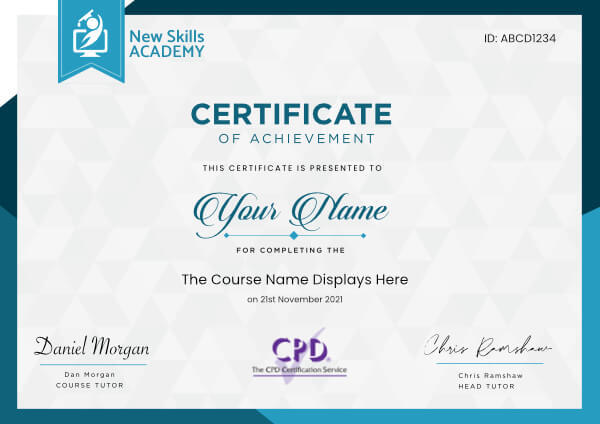
 ID: YDFT67YHJ
of achievement
This certificate is presented to
Your Name

For completing the
Web Applications for Beginners Certificate
on 21st November 2026
Selena Hurford
Selena Hurford
Course Tutor

Daniel Morgan
Daniel Morgan
Head of Academy
Anyone who has an interest in learning more about this subject matter is encouraged to take the course. There are no entry requirements to take the course.
The course is broken down into 10 individual modules. Each module takes between 20 and 90 minutes on average to study. Although you are free to spend as much or as little time as you feel necessary on each module, simply log in and out of the course at your convenience.
You can study the course any time you like. Simply log in and out of the web based course as often as you require. The course is compatible with all computers, tablet devices and smart phones so you can even study while on the move!
Once you have completed all 10 modules there is a multiple choice test. The questions will be on a range of topics found within the 10 modules. The test, like the course, is online and can be taken a time and location of your choosing.
The pass mark for the test is 70%.
If you don’t pass the test first time you will get further opportunities to take the test again after extra study. There are no limits to the number of times you can take the test. All test retakes are included within the price of the course.
You can either use your Visa, MasterCard, American Express, Solo cards or PayPal account to pay for the online course. Our site uses the latest SSL encryption to ensure your safety. All payments are handled securely by PayPal.
You can begin the course immediately after your payment has been received. You will create your login details during the checkout process. We will also send you an email confirming your login details.
We estimate that the course will take about 15 hours to complete in total, plus an additional 30 minutes for the end of course test.
Once you have been awarded your certificate it is valid for life. The certificate does not expire or need renewing.
Just writing to congratulate your team for putting this course together. I have been Training with SEN for a year as a trainee and fallen in love with this profession and the development of children in early years. I have had some professional in house training but i really enjoyed this course thank so much i needed a way to prove the some of my gained knowledge for my self as a single mum working so hard i am in tears this morning with joy thank so much i have lot of work to with our children with revisited knowledge and insight knowledge what bank of information to come back to when i need refreshing
Thank you This course was amazing I couldn't stop reading Like a hungry child
Tracey Boyce
This is a fantastic course, it is incredible value for money and it will give you all the information you need to be able to pursue the career of Teaching Assistant.
Being able to do it all in your own time makes it a lot less stressful if you're trying to fit it around work and life in general and the addition of worksheets throughout helps you see which areas need improvement before you take the final test.

Jack Whitcher
I my opinion it is the best idea for people who working full time. You can start anytime you want, all files you can keep to learning. You are boss yourself:-)
The platform is available anytime, I can back to module if I forgot something. I recommend for everyone who wants broaden their knowledge.

leksandra Szczepaniak
I have not long started this course but I would recommend it to anyone who is thinking about opening their own baking business.
It has taught me new and interesting things so far and I am excited to complete the remaining modules. This course is helping me to understand what it is like to start a business and how much is actually needed to make it work. I have really enjoyed learning new techniques and ingredients for baking cakes, muffins etc and also what ingredients you can use to cater a variety of people.
I am so glad I came across this course.

Cindel Simmill
I am over the moon with this course and just had to leave a positive review.
The content is very relevant and completely up to date, it gives a fantastic overview of Advertising which is simple and easy to read and digest. It has helped me understand aspects in my current job role more than I needed. I am confident it would help anyone take the plunge into the marketing world!! The little tests along the way are also really handy, and tests what you have understood.
I would highly recommend this course. I am really looking forward to completing the remainder of this course, and browse what other courses are available. Thank you!!

Danielle Woodall
I am about half way through my course now and it is just fantastic. Such an easy way for learning and studying from home in my circumstances is the best option for me. Very helpful when I have needed help and such a brilliant course to follow..

Kirsty Jefford
Web Applications for Beginners Certificate Course
If you have ever used Netflix, listened to Spotify or purchased goods via Amazon, then you know well the smooth experience of using a web application. In fact, web apps are becoming even more sophisticated and ubiquitous.
A fast growing industry, web app development is driving a demand for quality Web Developers and predictions are that this demand is likely to grow exponentially in the next decade!
The time is now to learn to develop applications for the Web and with the huge variety of web technologies and frameworks available, web application development is now easier than ever.
Whether you are excited at the possibility of developing web applications for your commercial or personal needs, you will find this course useful. We have covered the basics of web apps and included tips and example code to get you on your way to your first web application in no time.
In this course we cover the basic elements of web applications including front end, back end, databases and the code needed to connect all of these into a working app. We have included guidelines for application development, outlined the process with its individual stages from feature definition to publishing your app to a web server.
Along with that, we cover a lot of frameworks – both for the front end and the back end of your web app that will accelerate the process of development and save you time and stress. We also discuss cutting edge technologies for developing web apps and some latest trends.
By the end of the course you will be familiar with key web technologies including HTML, CSS, JavaScript, AngularJS, MySQL and PHP.
What you will learn:
The aim of the course is to equip you with the knowledge and tools to build your first web application. It is a practical course with code example, coding activities and plenty of guidance material to help you complete them.
You will learn:
- What a web application is and how it works with browsers and servers
- The development methodologies, their differences and the different stages in web app development
- How to define the features, technical requirements and plan your web app project
- What a front end is and the languages used for front end coding
- The most popular JavaScript frameworks and their differences
- What User Interface, User Experience and Material Design are and why they matter
- The difference between relational and non-relational databases and how to create them
- The elements that make up a typical backend and the most popular frameworks
Benefits
There are a number of benefits, which include:
- Comprehensive, practical and easy-to-understand course material
- Example code with broad explanations using HTML, CSS, JavaScript, AngularJS, SQL and PHP coding languages
- End of module activities and a final test which are designed to expand your overall understanding and put what you’ve learned into action
- Can be completed anywhere with an Internet connection.
- Gaining relevant knowledge about an ever-growing industry, which will provide you with practical skills for the workforce.
- Being able to write simple web pages and elements using HTML, CSS and JavaScript at the end of the course
This course includes
24/7 Student Support
End of course certification
Lifetime access to your course
Compatible with modern devices
- What a web application is and how it works with browsers and servers
- The different types of web applications that one can build for the Web
- The main difference between a website and web application
- The main difference between a traditional software application and a web application
- What the three main components of any web application are
- What the difference between front and back end code is
- What the purpose of a database in a web app is
- What the two main development methodologies are, and their differences
- How to start defining the features and technical requirements for your app
- The main questions you need to ask when defining the purpose and audience
- What wireframes are and why they are an important step in web app development
- The purpose of the Unified Modelling Language (UML) and how it can help you create a model flow for your app
- What a front end is and the languages used for building front end code
- How you can use the latest version of HTML to create a front end structure using semantic markup tags
- How to define a web app layout using HTML elements
- How to create an external style sheet for the styling code and import it into the HTML document
- How to create an external JavaScript file
- How to use JavaScript script tags and functions to add features to your app
- What JavaScript frameworks are and why is it good practice to use them
- Which the most popular JavaScript frameworks are and their differences
- What User Interface is and how it is different from User Experience
- What the basic guidelines for User Interfaces are
- What the key practices are that can help your design look modern and aesthetic
- What a design language is and how it is used by web app designers
- What a database is and the three main concepts of entities, attributes and relationships between them
- The two main types of databases based on the type of information you will store in them
- How a relational database works and the concepts of a record, primary and foreign key in the context of a database table
- What normalisation is and why it is important when creating queries to the database
- The key components of a back end for a web application
- What middleware is in the context of the back end to front end relationship
- The advantages of Java as a language for back end development
- Why Python is the biggest rival to Java for back end development
- How to set up your project folder when starting the front end of a web app
- How to quickly setup a MySQL database and how to fill it with data
- How to use the AngularJS framework to speed up the front end coding process
- How to build the HTML structure of your app and link AngularJS code to HTML elements
- How to effectively utilise CSS styles to the front end built with HTML
- What the CSS Box is, including the concepts of borders, padding and margins
- How to create code for the back end using AngularJS and PHP
- How to utilise AngularJS templates and data binding to achieve a near-OOP style
ID: YDFT67YHJ
of achievement
This certificate is presented to
Your Name
For completing the
Web Applications for Beginners Certificate
on 21st November 2026
Selena Hurford
Selena Hurford
Course Tutor
Daniel Morgan
Daniel Morgan
Head of Academy
Anyone who has an interest in learning more about this subject matter is encouraged to take the course. There are no entry requirements to take the course.
The course is broken down into 10 individual modules. Each module takes between 20 and 90 minutes on average to study. Although you are free to spend as much or as little time as you feel necessary on each module, simply log in and out of the course at your convenience.
You can study the course any time you like. Simply log in and out of the web based course as often as you require. The course is compatible with all computers, tablet devices and smart phones so you can even study while on the move!
Once you have completed all 10 modules there is a multiple choice test. The questions will be on a range of topics found within the 10 modules. The test, like the course, is online and can be taken a time and location of your choosing.
The pass mark for the test is 70%.
If you don’t pass the test first time you will get further opportunities to take the test again after extra study. There are no limits to the number of times you can take the test. All test retakes are included within the price of the course.
You can either use your Visa, MasterCard, American Express, Solo cards or PayPal account to pay for the online course. Our site uses the latest SSL encryption to ensure your safety. All payments are handled securely by PayPal.
You can begin the course immediately after your payment has been received. You will create your login details during the checkout process. We will also send you an email confirming your login details.
We estimate that the course will take about 15 hours to complete in total, plus an additional 30 minutes for the end of course test.
Once you have been awarded your certificate it is valid for life. The certificate does not expire or need renewing.
Just writing to congratulate your team for putting this course together. I have been Training with SEN for a year as a trainee and fallen in love with this profession and the development of children in early years. I have had some professional in house training but i really enjoyed this course thank so much i needed a way to prove the some of my gained knowledge for my self as a single mum working so hard i am in tears this morning with joy thank so much i have lot of work to with our children with revisited knowledge and insight knowledge what bank of information to come back to when i need refreshing
Thank you This course was amazing I couldn't stop reading Like a hungry child
Tracey Boyce
This is a fantastic course, it is incredible value for money and it will give you all the information you need to be able to pursue the career of Teaching Assistant.
Being able to do it all in your own time makes it a lot less stressful if you're trying to fit it around work and life in general and the addition of worksheets throughout helps you see which areas need improvement before you take the final test.
Jack Whitcher
I my opinion it is the best idea for people who working full time. You can start anytime you want, all files you can keep to learning. You are boss yourself:-)
The platform is available anytime, I can back to module if I forgot something. I recommend for everyone who wants broaden their knowledge.
leksandra Szczepaniak
I have not long started this course but I would recommend it to anyone who is thinking about opening their own baking business.
It has taught me new and interesting things so far and I am excited to complete the remaining modules. This course is helping me to understand what it is like to start a business and how much is actually needed to make it work. I have really enjoyed learning new techniques and ingredients for baking cakes, muffins etc and also what ingredients you can use to cater a variety of people.
I am so glad I came across this course.
Cindel Simmill
I am over the moon with this course and just had to leave a positive review.
The content is very relevant and completely up to date, it gives a fantastic overview of Advertising which is simple and easy to read and digest. It has helped me understand aspects in my current job role more than I needed. I am confident it would help anyone take the plunge into the marketing world!! The little tests along the way are also really handy, and tests what you have understood.
I would highly recommend this course. I am really looking forward to completing the remainder of this course, and browse what other courses are available. Thank you!!
Danielle Woodall
I am about half way through my course now and it is just fantastic. Such an easy way for learning and studying from home in my circumstances is the best option for me. Very helpful when I have needed help and such a brilliant course to follow..
Kirsty Jefford
Why you should study with us
Learn with confidence...

 RRP
$100
RRP
$100
Get a FREE Course
Tick this box to Sign up for our newsletter, and get access to the Interview Skills and CV Writing Certificate course for free! By signing up, you agree to our Privacy Notice & Cookie Policy and to receive marketing and related emails from academy+ brands. You can unsubscribe at any time.What our students say about us...
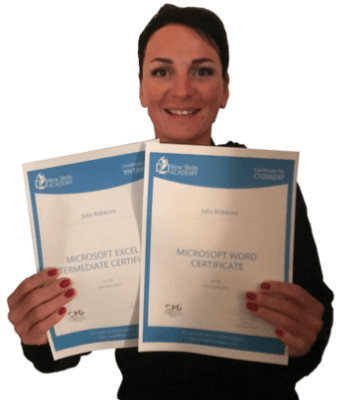
This is a great course for any level of knowledge. Very easy to navigate, great practical tasks and explanations are very clear. You can revise any module with no problem. The test wasn’t too hard if you completed every module. It may be handy to make some notes before you start. Overall I'm very happy with my choice. Thank you New skills for my New skills :)
Julia Bobkova

I found this course incredibly useful, as it provided me with practical knowledge which I can implement in my role as a Support Worker. The videos were clear and concise, and the downloadable worksheets reinforced what I had learned as I was able to put pen to paper. Overall, a fantastic course for a great price! I am looking forward to taking on my next one.
Teleisha Harley
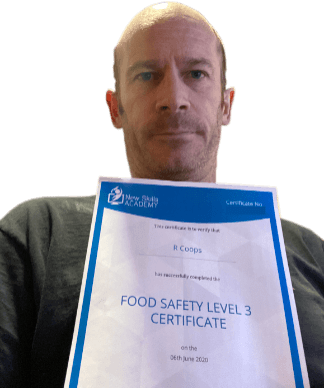
Yet another well laid out course. This is my 3rd course so far with New Skills Academy.
More than likely will be back for another one soon. This course was enjoyable to do, and I learnt a lot and passed first try. My certificate will be up on the wall soon.
Rob Coops

The course was clearly set out with helpful end of week tests which built my knowledge. Being dyslexic I found the course was set out in an easy to understand way. I was able to pass the test on my first attempt. The downloaded pdf are a useful resource that you can keep forever. Looking forward to the next course
Ross Dunsten

Wow what an incredible insight for the start of anyone's journey in property. This course gives you so much information and there are tests and questions on each of the modules. The course is very easy to follow and well laid out. You can actually make notes on the pages of each module using the notes tab! I am very excited to say that I passed and I only spent one week on this course. I will print all the PDF information and keep it in a file with my certificate. I feel very confident for my future plans now I have completed this course.
Nichola Anderson

Fantastic course! Well-presented and challenging with frequent assessments. I feel a serious sense of accomplishment having not studied for over 30 years! Videos that accompany each module are carefully thought out and informative. Am so impressed with this course, have now signed up for 3 other courses and recommending New Skills Academy to everyone!
Marva Hudson

Lovely course for people who want to know the basics and of sign language. It's has helped me to get more of an understanding and will greatly benefit me in my workplace. So easy to pick up and the videos were easy to understand. Would definitely recommend to anyone.
Chloe Hambly

I took up this course initially to help me with my own dog, but found that as I worked through the material I actually started thinking that this could be something that I could use to make a second income. From start to finish I found the course engaging and interesting. I am now doing another dog related course and am experiencing the same level of enjoyment. I would recommend New Skills Academy without hesitation.
Keith Smith